
Guide
A2 · Elementary
Grammar
Few, A Few, Little and A Little: Quantity and Meaning
Use few, a few, little and a little to match the noun and the speaker’s meaning. Includes ten checks with context-based explanations.
7 min read
1,146 words
Updated Oct 25, 2026
On this page (7 sections)
1. Same amount, different message
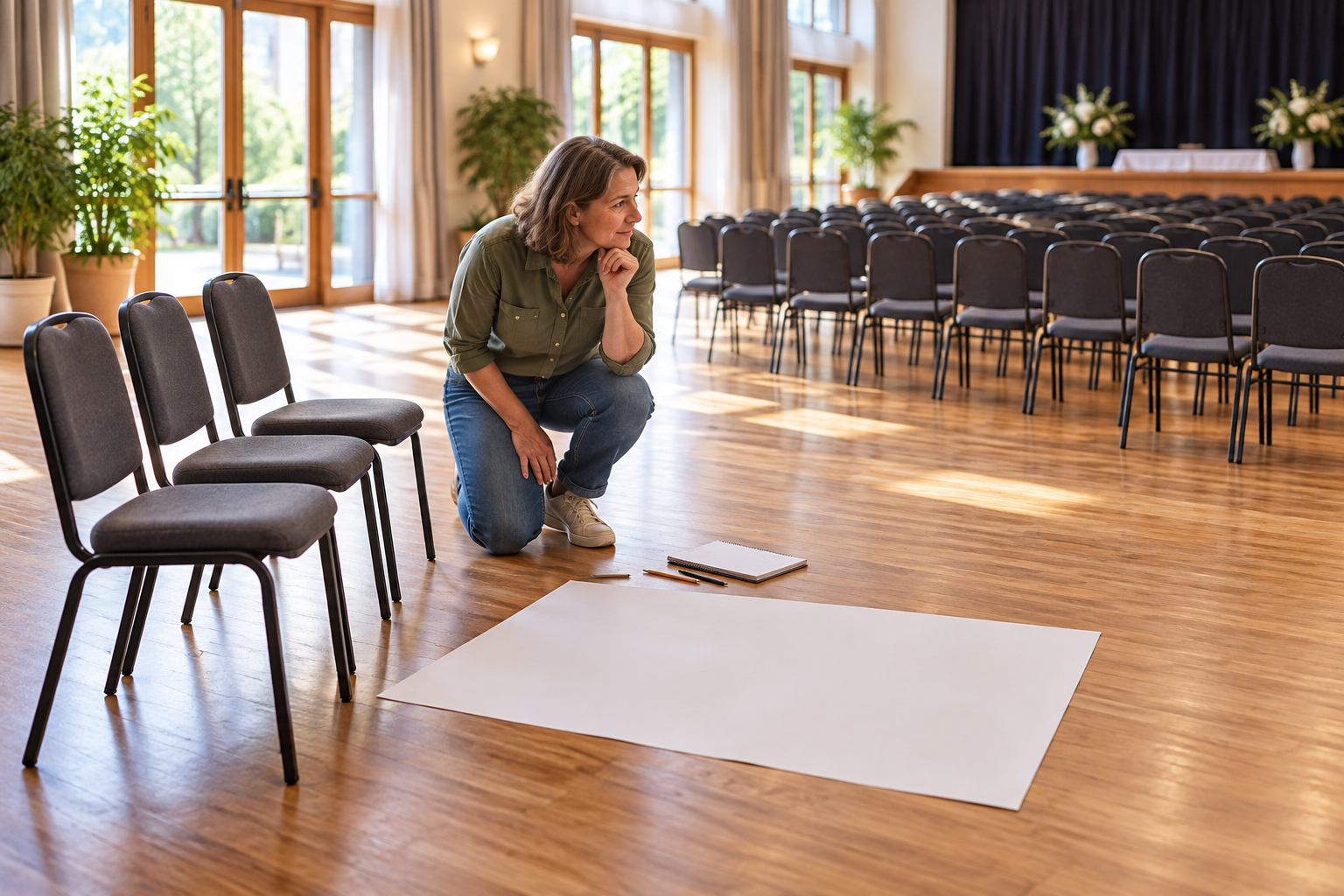
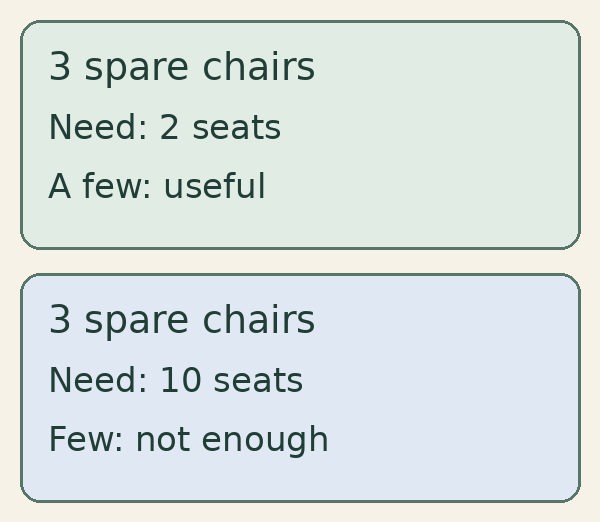
Three spare chairs can be enough or not enough. Jo needs seats for two extra guests: “We have a few chairs, so they can sit down.” Ren needs seats for ten extra guests: “We have few chairs, so we need more.” The amount is the same. The need changes the message.
A few and a little present a small amount as something available. Few and little often stress how small or limited the amount is. They do not give an exact number. Read the whole situation before choosing.
2. Countable or uncountable first
Use few or a few with a plural countable noun: chairs, helpers, questions. Use little or a little with an uncountable noun: time, water, money, information. Ask whether you can use one, two and three directly with the noun.
If you are unsure which nouns you can count, check countable and uncountable nouns.
A chair is countable: one chair, three chairs. Water is normally uncountable: some water, a little water. A bottle is countable, so you can say a few bottles of water. The head word bottles changes the pattern even though the bottles contain water.
3. A few and a little: some available
A few means a small number: “A few helpers are here, so we can begin.” A little means a small amount: “We have a little time, so we can check the signs.” The speaker focuses on what can be done with the amount.
Some is a useful starting meaning, but it does not tell the whole story. A few and a little normally suggest a small quantity. “A few guests” does not mean one guest. “A little water” does not tell us a precise volume. Add a number or measurement when a plan needs exact facts.
4. Few and little: less than hoped
Few means not many: “Few helpers are here, so the tables will take longer.” Little means not much: “We have little time, so we must leave now.” These forms often show a problem, disappointment or a smaller amount than hoped.
Do not choose only by looking at a photograph of the amount. Three spare chairs may be useful for a small group and insufficient for a large group. Look for clues such as so we can, but we need more, or not enough. Few and little are already limiting; they do not require not to express that meaning.
5. Only, very and common traps
Only a few still uses the countable pattern, but only stresses a limit: “Only a few places are left.” Very little makes the small amount stronger: “We have very little water.” Do not say very a little. A little bit of time is an informal alternative to a little time.
Keep the noun pattern correct even when the meaning feels clear. Write a little information, not a few information. Write few chairs, not little chairs, when you mean a small number. Little chairs is grammatical with a different meaning: physically small chairs. Context decides whether little describes amount or size.
6. Meaning before form practice
Choose the meaning first, then the noun pattern.
Answer on paper, then open the explanations below. Enable JavaScript to check answers here.
7. Choose a useful follow-up
Use four checks: noun, amount, need, message. First decide whether the noun is countable. Then find the actual quantity if one is given. Compare it with the need. Finally decide whether to show a useful amount or stress a shortage.
A compact reference
a few + plural noun
Some are available
A few chairs are free, so you can sit.
few + plural noun
Not many
Few chairs are free, so we need more.
a little + uncountable noun
Some is available
A little time remains, so we can check.
little + uncountable noun
Not much
Little time remains, so we must stop.
Transfer: you have ten minutes. For a two-minute check, say “We have a little time, so we can check.” For an hour-long task, say “We have little time, so we need another plan.” The words do not change the clock. They show how the available time fits the task.
Related Guides





Continue learning this topic
Review an explanation, study examples or try a related practice test.
- Practice test At Least 12 Injured in Shooting Near Florida A&M Stadium — B2 English Listening Practice Test
- Practice test At Least 12 Injured in Shooting Near Florida A&M Stadium — B2 English Grammar Practice Test
- Practice test At Least 12 Injured in Shooting Near Florida A&M Stadium — B2 English Vocabulary Practice Test
- Course lesson Tense and aspect for precise meaning – C1: Precision and Expression
- Course lesson Precise quantity and comparison – B1–B2: Grammar in Context