
Guide
A2 · Elementary
Grammar
Comparatives and Superlatives: Comparing Everyday Choices
Learn -er, more, -est, most and as ... as, compare clear facts, and choose everyday products with six explained checks.
7 min read
1,110 words
Updated Nov 11, 2026
On this page (10 sections)
Choose the comparison you need
A comparative describes a difference between two people, things or groups: This bag is cheaper than that one. A superlative identifies an extreme within a group: It is the cheapest bag in the shop. State the group when it could be unclear. The cheapest of these three bags is not necessarily the cheapest bag in the city. A useful comparison also names the quality: cheaper for price, lighter for weight, larger for size. Better is often too general unless the reader knows the purpose. A larger bag might be useful for travel but inconvenient on a crowded bus.
Make short-adjective forms
For many one-syllable adjectives, add -er and -est: small → smaller → smallest; cheap → cheaper → cheapest. If the adjective ends in -e, add -r and -st: large → larger → largest. A short consonant-vowel-consonant ending often doubles the final consonant: big → bigger → biggest; hot → hotter → hottest. Do not write biger. With a consonant before final -y, change y to i: heavy → heavier → heaviest; easy → easier → easiest. Keep the adjective’s meaning consistent: heavier describes more weight, which is not automatically an advantage. Check unfamiliar forms in a learner dictionary.
Use more and most
Longer adjectives usually use more for a comparative and most for a superlative: more comfortable; the most comfortable. Expensive becomes more expensive and the most expensive. Do not put both patterns together: more cheaper and the most cheapest are incorrect in standard English. Some two-syllable adjectives allow more than one form, such as simpler or more simple. Common classroom patterns help, but syllable count is not an absolute rule for every adjective. Use familiar examples first. Less and least compare in the other direction: less expensive means lower in price; the least expensive is the lowest-priced item in the stated group.
Learn the important irregular forms
Good becomes better and best; bad becomes worse and worst. This light is better for reading than that one. This is the worst road on my route. Do not use gooder or badder for these ordinary comparisons. Far can become farther/further and farthest/furthest in distance contexts; a beginner can use further when unsure of the local preference. Choose the irregular word that fits the sentence’s structure: comparative better when comparing alternatives; superlative best when selecting the top member of a group. A claim of best needs a purpose or evidence, particularly when you recommend a purchase.
Add than and usually the
Use than to introduce what you compare with: The green bag is lighter than the blue bag. In a simple superlative noun phrase, use the: the lightest bag. A possessive can take its place: my best bag, not the my best bag. For a place or category, in is common: the cheapest bag in the shop. With a stated set, of works: the cheapest of the three. Do not let than become then: than compares; then shows time order. Write the whole comparison so the reader knows both sides. It is cheaper needs context about the other item.
Compare equality with as ... as
Use as + adjective + as when a quality is equal: Bag A is as heavy as Bag B. Keep the basic adjective, not heavier. For a lower degree, use not as + adjective + as: Bag A is not as expensive as Bag C. This means A costs less than C. Be careful with negative adjectives: not as heavy means lighter; not as cheap means more expensive. Use the numbers to check your meaning before you finish the sentence. Equal price does not imply equal quality, capacity or comfort. Compare only the feature for which you have evidence.
Read the comparison grid
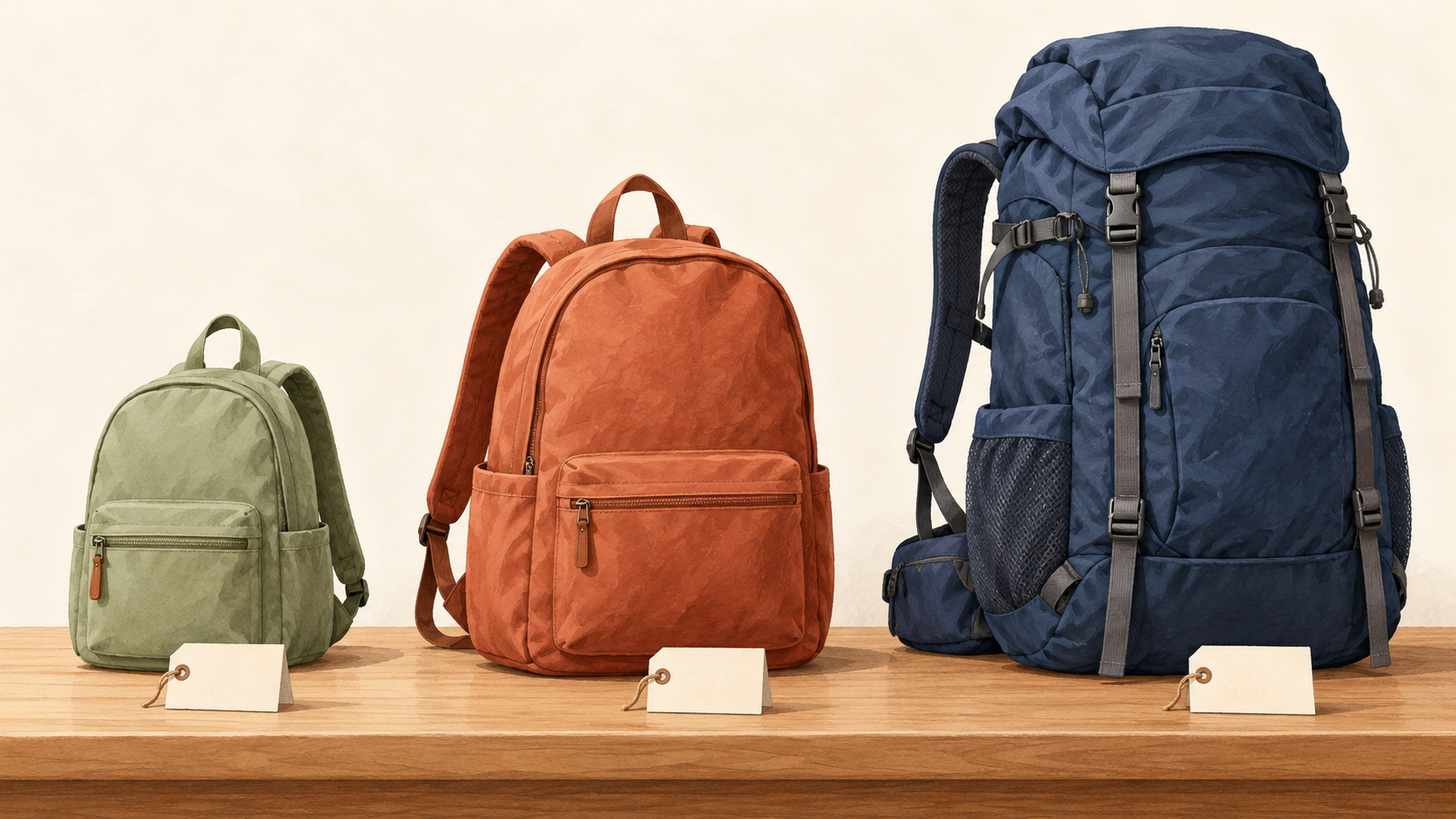
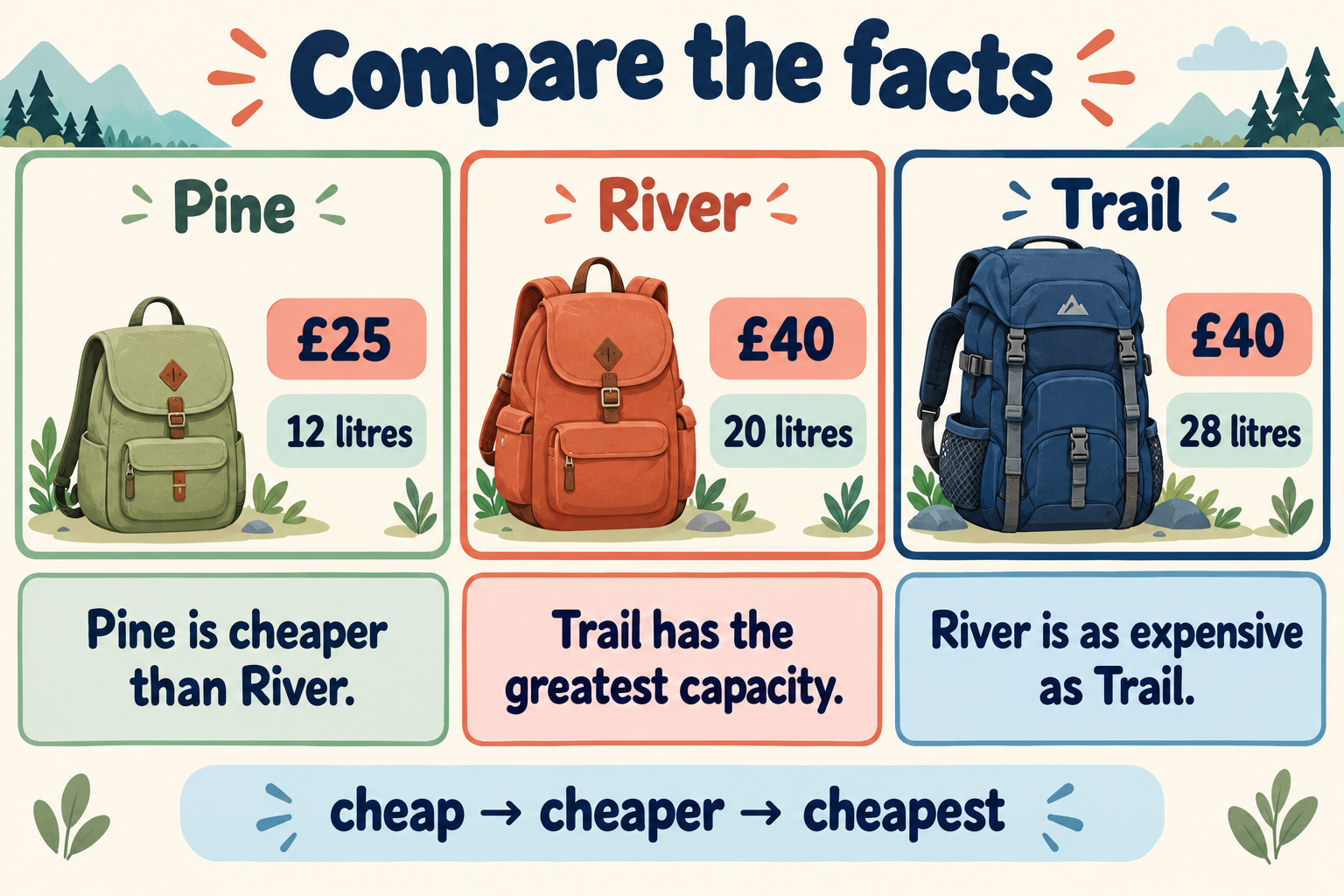
The fictional bags have these facts: Pine costs £25 and holds 12 litres; River costs £40 and holds 20 litres; Trail costs £40 and holds 28 litres. Pine is cheaper than River. Trail is the largest by capacity. River is as expensive as Trail. The inline grid repeats these facts and shows the form patterns. The image is a learning aid; all the information is also written here. When you recommend one, name a need: Pine suits a low budget; Trail provides the greatest capacity of the three. Practise the six checks, then make your own comparison using a stated feature and group.
Quick check
Choose an answer, then check the explanation. If you prefer, note your answers before revealing the key.
Answer on paper, then open the explanations below. Enable JavaScript to check answers here.
Answer key and explanations
1. heavier — Change consonant + y to i and add -er: heavier.
2. the most comfortable — Comfortable normally uses most; the marks the superlative noun phrase.
3. than — Than introduces the item used for comparison.
4. River is as expensive as Trail. — Use as + basic adjective + as. Both bags cost £40.
5. Trail has the greatest capacity of the three. — Trail holds 28 litres, more than River’s 20 and Pine’s 12.
6. Pine is suitable for a £30 budget because it costs £25. — The price meets the stated budget. The other claims are unsupported or contradict the facts.
Related learning
Related Guides





Continue learning this topic
Review an explanation, study examples or try a related practice test.
- Practice test Places Around Town Words — A1 English Vocabulary Practice Test
- Practice test Clothes and Weather Words — A1 English Vocabulary Practice Test
- Practice test Finding the Library on Green Street — A1 English Listening Practice Test
- Course lesson A1 review: Introductions and everyday routines – A1–A2: Grammar Foundations
- Course lesson Comparatives and superlatives: Bigger, best and as…as – A1–A2: Grammar Foundations
- Course lesson A2 review: Past events, future plans and everyday choices – A1–A2: Grammar Foundations