
Guide
B1 · Intermediate
Grammar
Used To and Would: Talking About Past Habits
Describe changed past habits and states with used to and repeated actions with would. Check negatives, questions and be used to with six explained tasks.
7 min read
1,108 words
Updated Nov 10, 2026
On this page (9 sections)
Connect an earlier life with the present
Used to helps you describe something that was true before and is no longer true, or that you present as a contrast with the present. Would can build a picture of repeated past actions after the past situation is clear. Both are useful in memories, but they are not interchangeable in every sentence.
Used to + base verb: past habits
When I lived near the river, I used to walk to work. The walking happened regularly in that past period. It suggests that the situation has changed. Used to has the same form for all subjects: she used to walk; they used to walk.
You do not need used to for every past action. Yesterday I walked to work describes one completed action. Use past simple for a single dated event. In a longer memory, you can combine past simple for events with used to for background habits.
Used to also describes past states
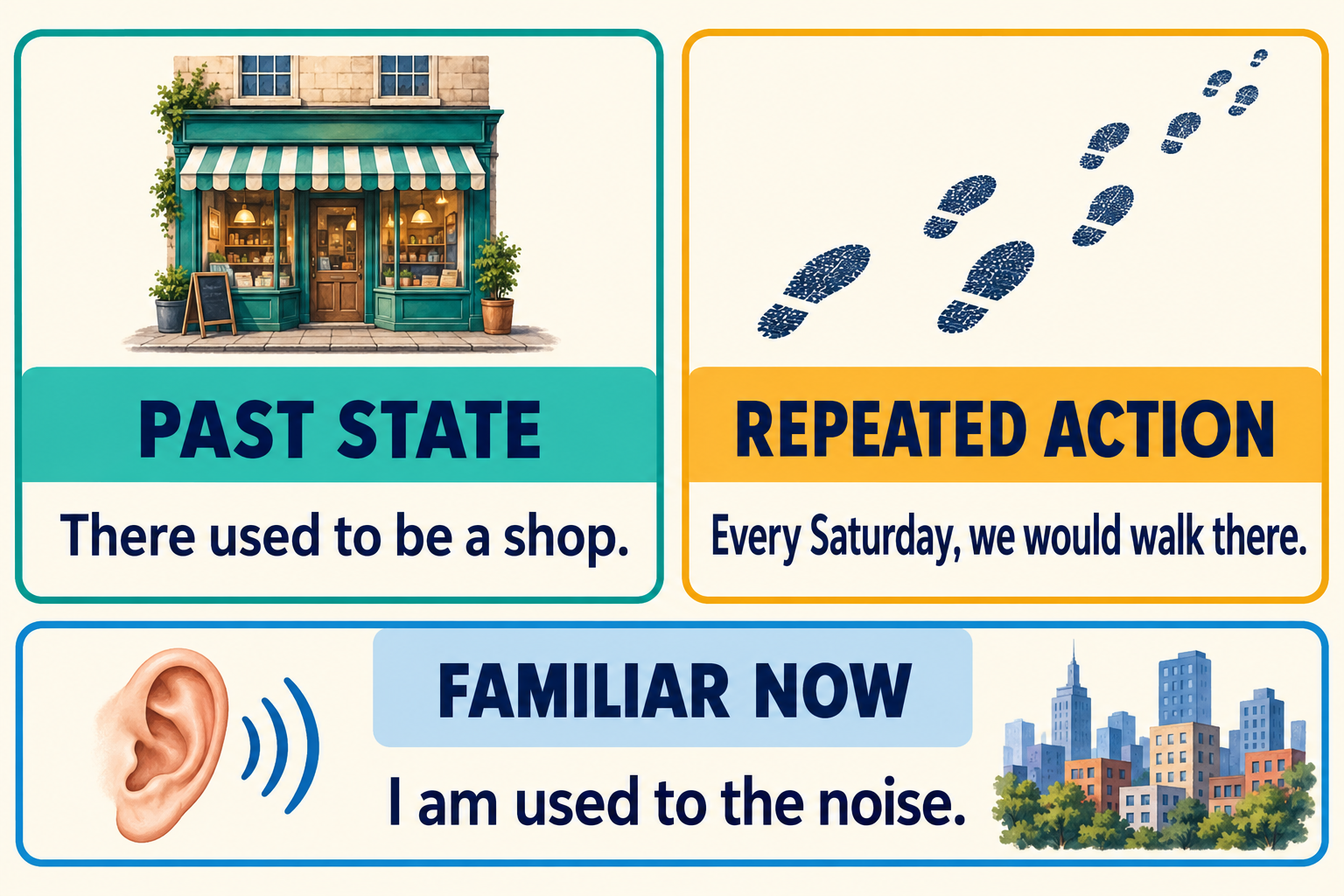
A state describes a situation, possession, belief or feeling rather than a repeated activity. There used to be a bakery here. I used to know everyone on this street. My aunt used to own that house. These sentences can naturally contrast an earlier state with the present.
Do not replace used to with habitual would for these isolated states: “I would know everyone” does not normally express the intended changed past state. Use I used to know everyone. Some uses of would have other meanings; focus on the repeated-action pattern here.
Would: repeated actions in a clear past setting
First establish when you are remembering: When I was a student, I lived beside the station. Every morning I would buy a newspaper, and I would read it on the train. Buy and read are repeated actions. The past setting and phrases such as every morning make this meaning clear.
Without the past setting, “I would buy a newspaper” might sound like a conditional choice instead of a memory. Would by itself also does not clearly say whether an action has stopped now. Add context when the contrast matters. In simple narratives, used to can introduce the pattern and would can continue it.
Negatives and questions with did
Negative: I didn’t use to drive.
Question: Did you use to live here?
Short answer: Yes, I did. / No, I didn’t.
After did/didn’t, write use to, not used to, in standard learner writing.
Avoid “I didn’t use to drove”. The action verb is also in the base form: drive. Negative would often suggests refusal, as in “The door wouldn’t open”, so didn’t use to is clearer for a simple changed past habit.
Be used to and get used to are different
I am used to the noise means the noise is familiar and not surprising to me. I am used to living here means living here is familiar. In this expression, to is a preposition, so use a noun or an -ing form after it.
Get used to describes becoming accustomed: I am getting used to taking the bus. Compare: I used to take the bus = a past habit presented as changed. I am used to taking the bus = it is familiar now. I am getting used to taking the bus = I am adapting. The presence of am/is/are or get changes the structure and meaning.
Six quick checks
Answer on paper, then open the explanations below. Enable JavaScript to check answers here.
Build a short memory
Your turn · self-review
A then-and-now memory
Write two or three sentences about an earlier place or routine, then compare the model.
Practice only. Your writing stays on this page; it is not submitted or saved.
-
Model answer and explanation
There used to be a small café beside my office. Every Friday, my colleagues and I would meet there after work. The café is a bicycle shop now.
Self-check
I distinguished repeated actions from states.
I established a past setting before using habitual would.
I used use to after did or didn’t.
I kept used to do separate from be/get used to doing.
Related Guides





Continue learning this topic
Review an explanation, study examples or try a related practice test.
- Practice test How Hydroxyapatite Toothpaste Compares With Fluoride for Oral Health — C1 English Listening Practice Test
- Practice test How Hydroxyapatite Toothpaste Compares With Fluoride for Oral Health — C1 English Grammar Practice Test
- Practice test How Hydroxyapatite Toothpaste Compares With Fluoride for Oral Health — C1 English Vocabulary Practice Test
- Course lesson Present perfect or past simple: Choosing the right tense – B1–B2: Grammar in Context
- Course lesson Present simple: Daily routines and habits – A1–A2: Grammar Foundations
- Course lesson Past perfect: What had happened before? – B1–B2: Grammar in Context