
A1–A2: Grammar Foundations
Build clear everyday sentences, ask questions, and talk about the present, past and future.
- Level
- A1–A2
- Lessons
- 30
- Ready
- 30
Lessons
30 lessons
-
 A1 Lesson 1 20 min Not started
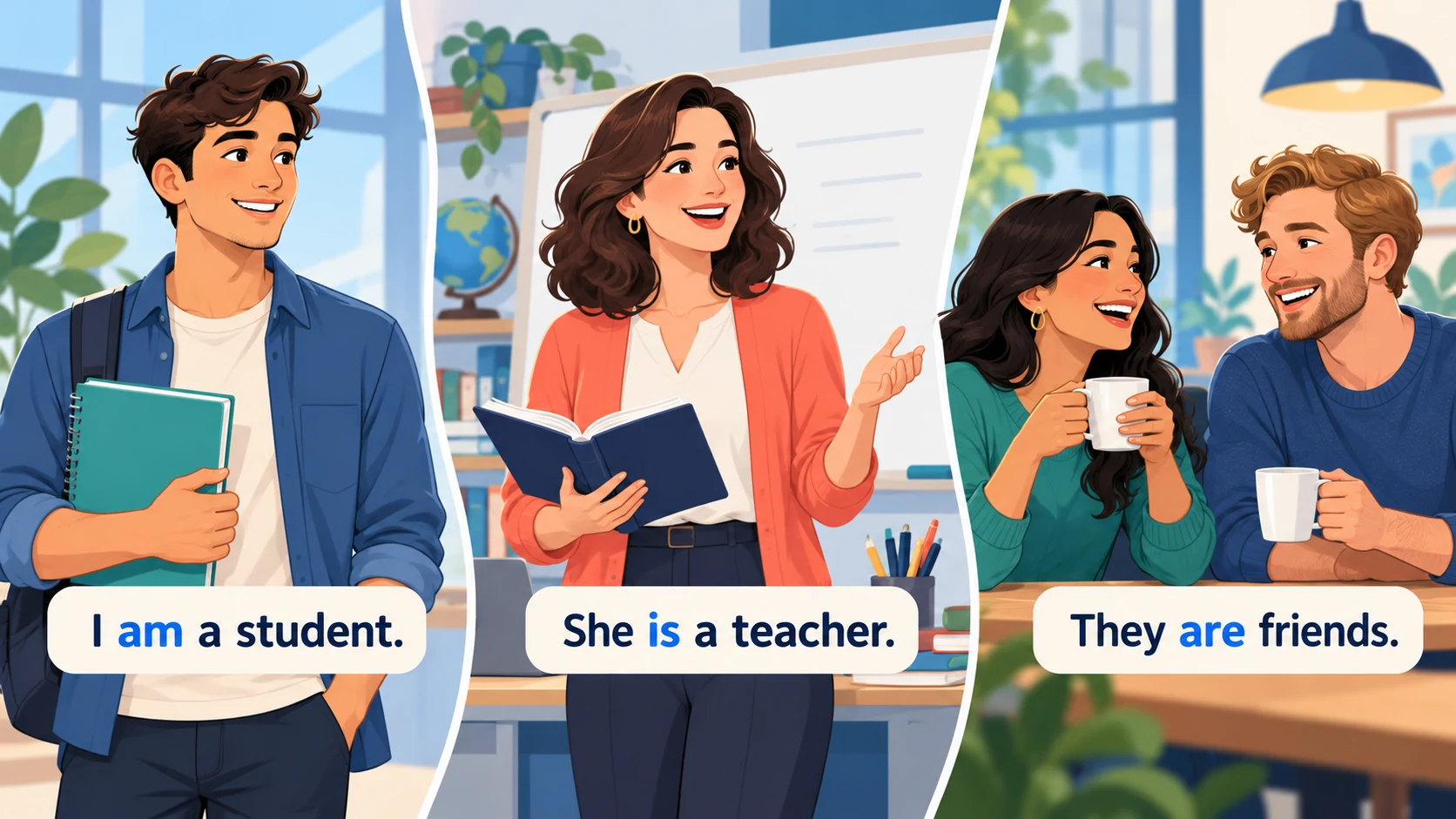
The verb be: Am, is and are
Introduce yourself and describe people, things and places with am, is and are. Practise positive sentences, negatives, questions and everyday short forms.
Start lesson -
 A1 Lesson 2 20 min Not started
Subject pronouns and possessives: I and my
Choose I, you, he, she, it, we and they as sentence subjects, and use my, your and other possessives before nouns. Practise talking about people and what belongs to them.
Start lesson -
 A1 Lesson 3 20 min Not started
A and an: Choosing the right article
Use a and an with singular countable nouns, including jobs and things you mention for the first time. Learn why the sound at the start of a word matters more than its first letter.
Start lesson -
 A1 Lesson 4 20 min Not started
Present simple: Daily routines and habits
Describe everyday routines and things that are generally true with the present simple. Practise he, she and it verb endings, including -s, -es, -ies and the form has.
Start lesson -
 A1 Lesson 5 20 min Not started
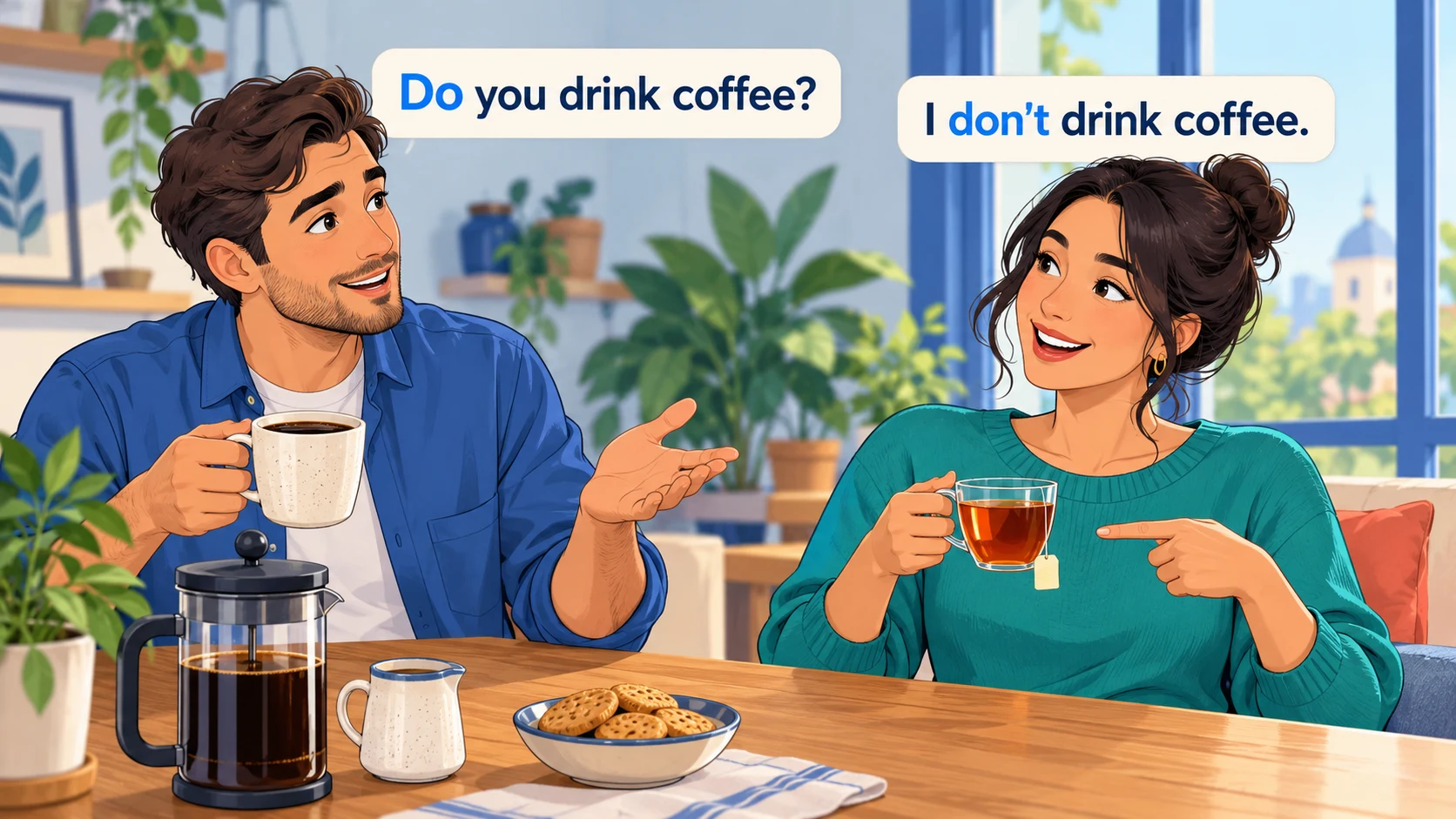
Present simple questions: Do, does, don't and doesn't
Ask about routines and make negative sentences with do, does, don't and doesn't. Practise question words, short answers and the base verb after do or does.
Start lesson -
 A1 Lesson 6 20 min Not started
Present continuous: What's happening now?
Use am, is and are with an -ing verb to describe actions happening now. Practise spelling changes, negative sentences and questions about what people are doing.
Start lesson -
 A1 Lesson 7 20 min Not started
Present simple or continuous: Usually or right now?
Choose the present simple for habits and facts, and the present continuous for actions happening now. Learn how time expressions and common state verbs help you decide.
Start lesson -
 A1 Lesson 8 25 min Not started
A1 review: Introductions and everyday routines
Bring together be, pronouns, articles and present tenses to talk about people and daily life. Check your understanding through mixed exercises and correct common beginner mistakes.
Start lesson -
 A1 Lesson 9 20 min Not started
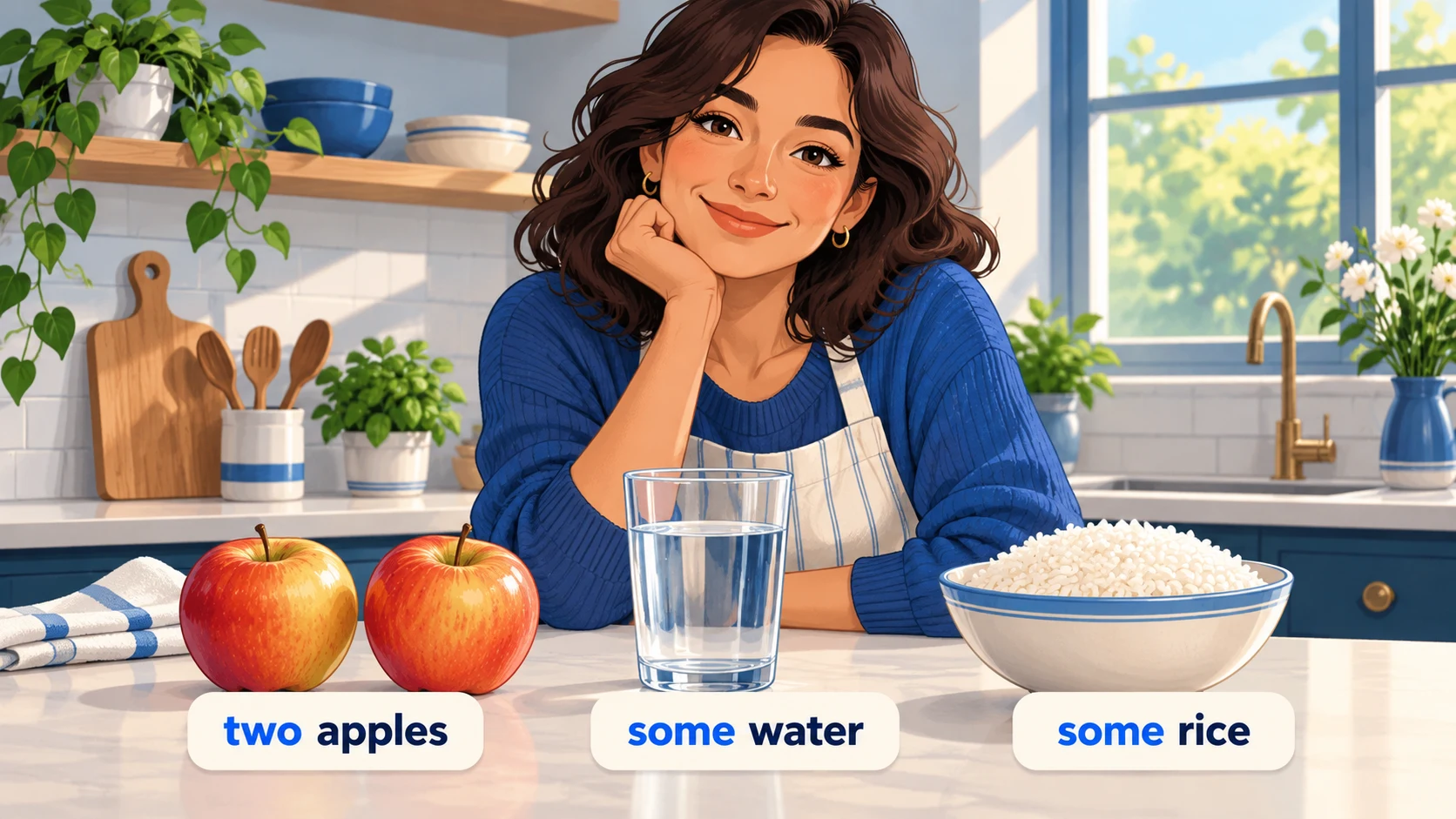
Plural and uncountable nouns: One, two or some?
Form regular and common irregular plurals, and recognise nouns such as water that are usually uncountable. Use containers and quantities to talk about food and everyday items.
Start lesson -
 A1 Lesson 10 20 min Not started
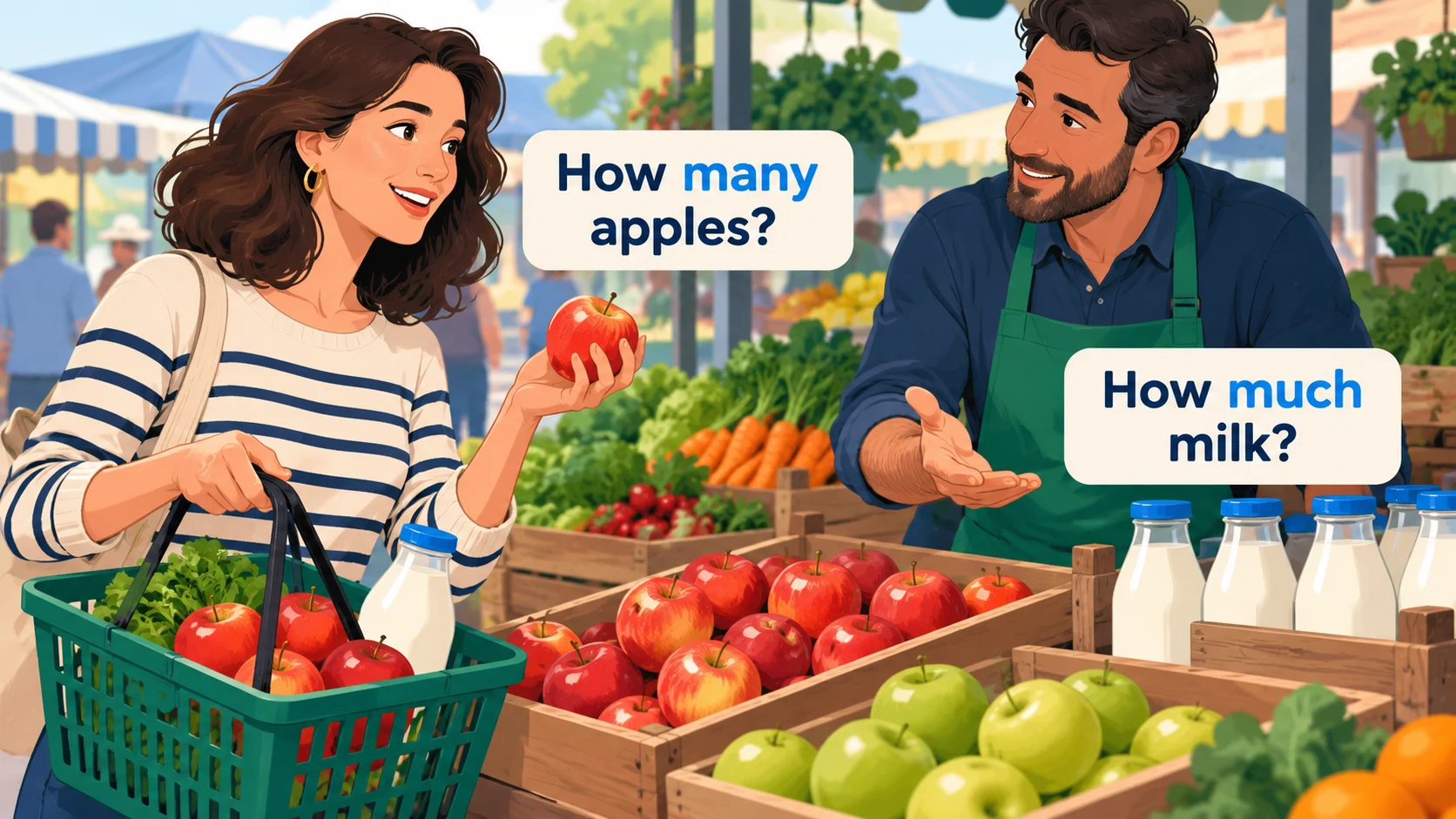
Some, any, much and many: Talking about quantity
Choose quantity words for countable and uncountable nouns in everyday situations. Practise some and any in statements and questions, and ask how much or how many.
Start lesson -
 A1 Lesson 11 20 min Not started
Possessives: Anna's, my, mine and whose
Show who owns something with possessive nouns, adjectives and pronouns. Practise apostrophes with one or more owners, ask whose, and distinguish its from it's.
Start lesson -
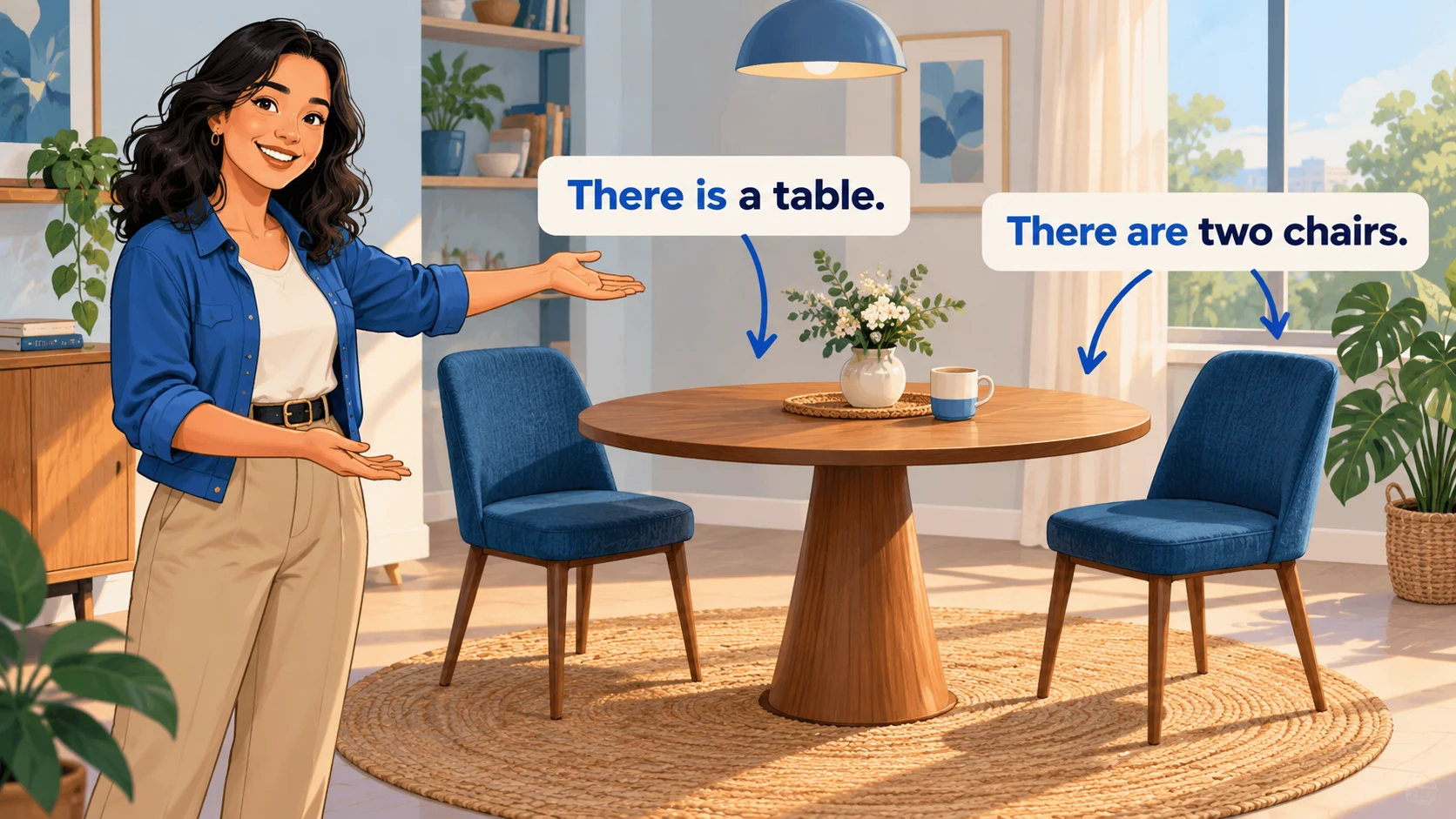 A1 Lesson 12 20 min Not started
There is and there are: Describing places
Say what exists in a room, home or neighbourhood with there is and there are. Practise singular and plural forms, questions and negatives to describe what is there.
Start lesson