
Lesson
A2 · Elementary
Grammar
Yesterday’s Power Cut: A2 Past Simple Practice
Read a short power-cut recount, answer 12 sequence and past-tense questions, then write a 40–60 word account with a model.
6 min read
1,074 words
Updated Nov 3, 2026
On this page (9 sections)
Your task
Read a short account of a finished evening. Find when things happened, follow the order, and notice regular and irregular past verbs. A torch is a small light you carry; a spare one is an extra one. Read once for the whole story, then again for the details. You can find every answer in the text or in its verb forms.
Yesterday’s power cut
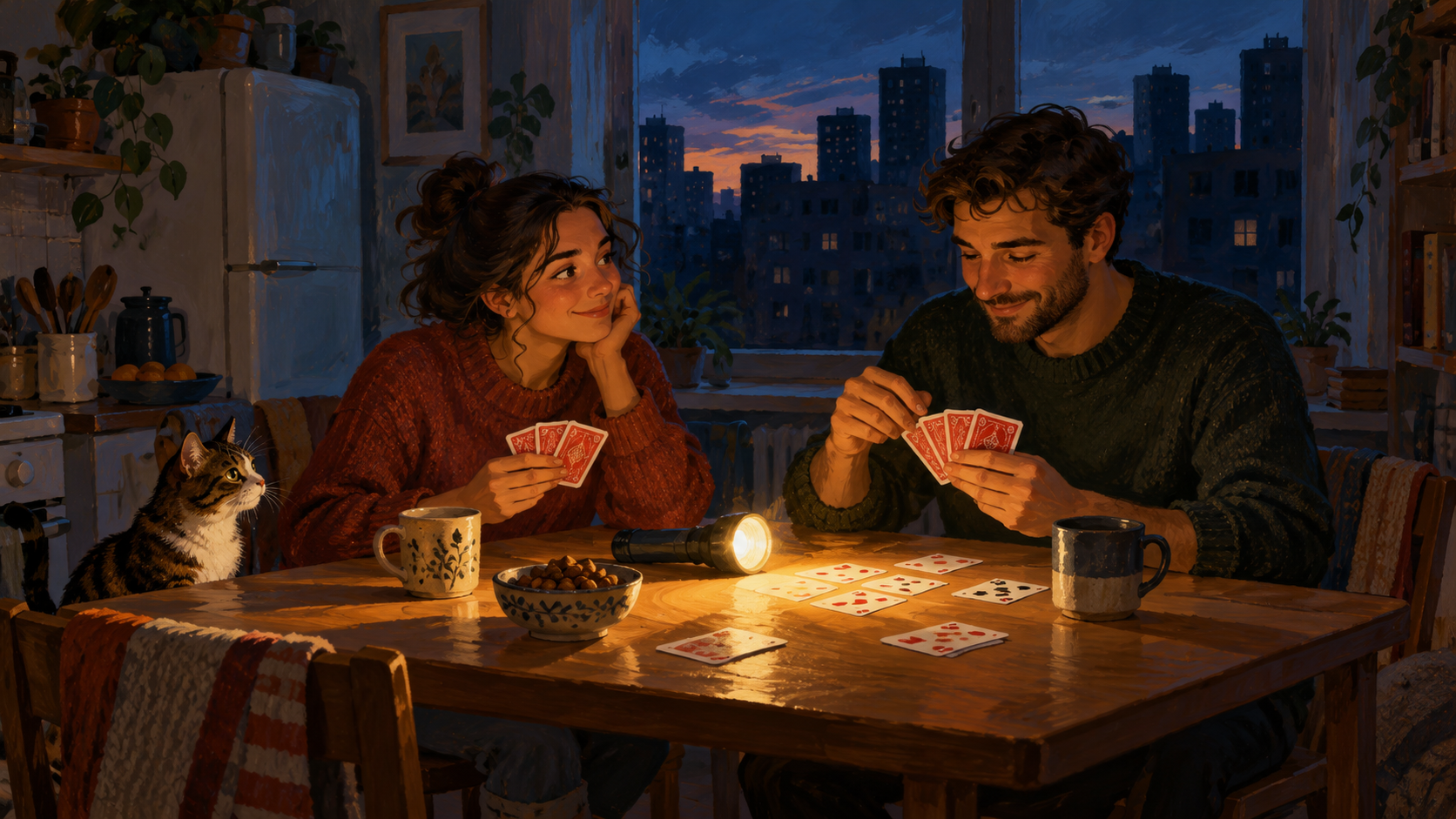
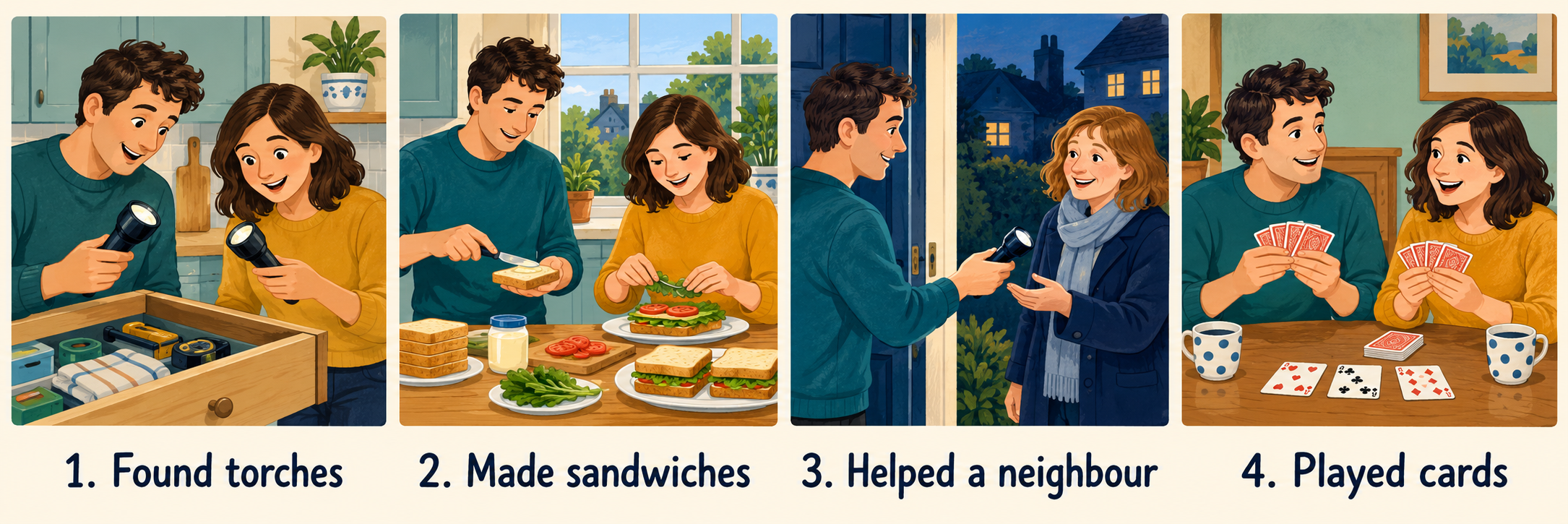
Yesterday evening, the electricity went off in our street. I was at home with my brother, Max. First, we found two torches in a kitchen drawer. We did not use candles because we had a curious cat. Next, Max checked his phone and read a message from our neighbour. The whole street had the same problem. We made sandwiches and sat beside the window. At seven thirty, our neighbour knocked on the door. She needed a torch, so we gave her our spare one. Then we played cards for an hour. I won the first game, but Max won the next two. Finally, the lights came back on at nine o’clock. We washed the plates and called our parents. It was a quiet evening, but we enjoyed it.
Before you answer
Draw a simple line from the start of the power cut to nine o’clock. Add finding the torches, making food, the neighbour’s visit and the card games. The order words first, next, then and finally help, but also look at the times. Did not use is a negative; the main verb is use, not used. Was, went, found, had, made, sat, gave, won and came are irregular past forms.
Twelve practice questions
Choose an answer, then check the explanation. If you prefer, note your answers before revealing the key.
Answer on paper, then open the explanations below. Enable JavaScript to check answers here.
Answer key and explanations
1. At home — The narrator says, “I was at home with my brother, Max.”
2. Found two torches — The first action is explicitly introduced by “First, we found two torches.”
3. They had a curious cat — The text gives the reason: they had a curious cat.
4. Their neighbour — Max read a message from their neighbour.
5. They made sandwiches — They made sandwiches before the seven-thirty visit.
6. At seven thirty — The text states the neighbour knocked at seven thirty.
7. A spare torch — She needed a torch, so they gave her their spare one.
8. The narrator — “I won the first game” identifies the narrator.
9. Torches → sandwiches → neighbour → cards — This follows the sequence in the recount.
10. use — After didn’t, use the base form use.
11. gave — Gave is the irregular past of give.
12. The lights came back on — The last sentence with an exact time says the lights came back on at nine.
Write 40–60 words
Imagine a different evening when a normal plan changed. Write 40–60 words. Say when it happened, give three events in order, include one negative, and end with a result or feeling. Use first, then and finally if they help. Your events can be invented. Check past forms and did not + base verb. Many answers are possible.
Model writing
Last Friday, our bus did not arrive. First, my friend and I waited outside the library. Then we called her sister. She drove us to a small café, and we bought hot chocolate. Finally, the rain stopped, so we walked home. We were late, but we enjoyed our unexpected café visit.
Check your writing
The model gives a finished time, uses a negative with arrive, orders the events and ends with a feeling. It mixes regular and irregular past forms. Your account does not need the same events. Check that it stays within 40–60 words and that a reader can follow the sequence.
Related learning
Related Lessons





Continue learning this topic
Review an explanation, study examples or try a related practice test.
- Practice test How Hydroxyapatite Toothpaste Compares With Fluoride for Oral Health — C1 English Listening Practice Test
- Practice test How Hydroxyapatite Toothpaste Compares With Fluoride for Oral Health — C1 English Grammar Practice Test
- Practice test How Hydroxyapatite Toothpaste Compares With Fluoride for Oral Health — C1 English Vocabulary Practice Test
- Course lesson Present perfect or past simple: Choosing the right tense – B1–B2: Grammar in Context
- Course lesson Present perfect simple or continuous: Result or duration? – B1–B2: Grammar in Context
- Course lesson Past perfect: What had happened before? – B1–B2: Grammar in Context