Bomb Threat Hoaxes Disrupt Flights Across Italy, Poland and Spain
 By Emma Carter

Image information
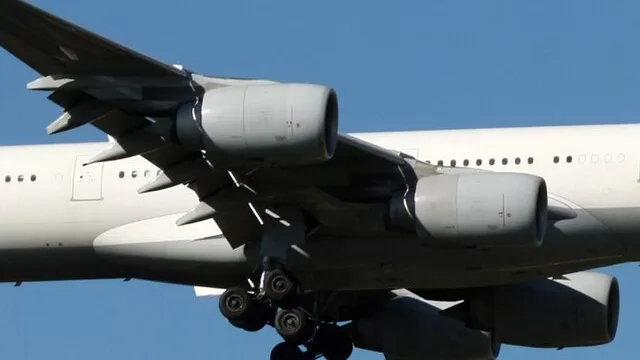
This is a representative image for this Daily News lesson.
Intro
Bomb threats that proved to be hoaxes disrupted air travel in Italy, Poland and Spain, leaving passengers to recount unexpected landings, security checks and delays.
Vocabulary
| Word | Part of speech | Meaning | Example |
|---|---|---|---|
| unsettling adjective | adjective | Meaning: Causing unease by disrupting one’s sense of security or predictability. | Example: The unsettling silence in the courtroom made every whispered remark seem consequential. |
| disorienting adjective | adjective | Meaning: Making someone feel confused about their surroundings or situation. | Example: The disorienting shift from formal debate to personal testimony changed the meeting’s tone. |
| precautionary adjective | adjective | Meaning: Taken in advance to reduce the risk of harm or an undesirable outcome. | Example: The editor added a precautionary note to distinguish verified findings from speculation. |
| credible adjective | adjective | Meaning: Sufficiently believable or convincing to merit serious consideration. | Example: Her account was credible because it remained consistent under detailed questioning. |
| established verb | verb | Meaning: Shown or determined to be true through evidence or investigation. | Example: The inquiry established that the records had been altered before publication. |
| unsubstantiated adjective | adjective | Meaning: Not supported by sufficient evidence to be accepted as true. | Example: The committee declined to act on an unsubstantiated allegation about the procurement process. |
| tangible adjective | adjective | Meaning: Concrete and perceptible, especially in contrast to something abstract. | Example: The negotiations produced tangible improvements in staffing and access to training. |
| circumstances noun | noun | Meaning: The conditions or facts surrounding an event or situation. | Example: The panel postponed judgment until it understood the circumstances of the resignation. |
The story
Passengers on flights affected by bomb threats in Italy, Poland and Spain described an unsettling combination of diversion, security checks and travel delays. The threats were later found to be hoaxes, but their consequences were real for people whose journeys were interrupted.
Some passengers recounted landing at a military base. Such an arrival can be especially disorienting: travelers may expect a commercial airport, yet instead find themselves in an unfamiliar setting while authorities assess a possible danger. The supplied account does not identify the base or specify which flight landed there.
Passengers also described undergoing security checks. These procedures formed part of the response to the threats, while the affected travelers waited and faced delays. The available facts do not establish how long those delays lasted, how many flights were involved, or whether every affected plane was diverted. They do show that the disruption reached beyond the moment a threat was reported, affecting passengers’ movements and schedules.
A bomb threat is an assertion that an explosive device may be present; it is not, by itself, proof that one exists. When a threat is treated as credible enough to investigate, precautionary measures can interrupt normal operations even if the claim ultimately proves false. In this case, the threats were hoaxes, yet passengers still encountered security procedures and delays as authorities responded.
The incidents spanned three countries, but the reported facts do not specify whether the threats were connected, who made them, or what prompted them. Nor do they establish a common sequence for every flight. What passengers had in common was the immediate experience of uncertainty: a planned journey gave way to checks and disruption before the threats were established as false.
For air travelers, the episode illustrates how an unsubstantiated threat can impose tangible costs without resulting in an actual attack. A hoax may leave no explosive device, but responding to it can still redirect passengers, consume time and unsettle people already in transit. The accounts point to those practical consequences while leaving the circumstances behind the threats unspecified.
Warm-up questions
- What kinds of uncertainty can make an otherwise routine journey feel disorienting?
- When might precautionary action be justified even before a danger is confirmed?
Comprehension questions
- Which three countries had flights affected by the threats?
- What unusual destination did some passengers report reaching?
- What information about the delays and diversions remains unknown?
- What distinction does the article draw between a threat and proof of an explosive device?
- What practical costs could a hoax impose, according to the article?
Opinion questions
- How should authorities balance the disruption caused by precautionary measures against the consequences of underreacting to a credible threat?
- Which practical cost of a hoax threat do you consider most consequential for travelers, and why?
Further discussion
- How can uncertainty affect passengers differently from the eventual confirmation that a threat was false?
- What information would help the public understand a disruption without inviting unsupported conclusions about its cause?
Writing prompt
- Write a short analytical commentary on how precautionary responses to unsubstantiated threats can create tangible costs. Distinguish established facts from unanswered questions, and assess how authorities might communicate uncertainty clearly.