Racton Monument: Britain’s Roofless Folly with a Chilling Reputation
 By Emma Carter
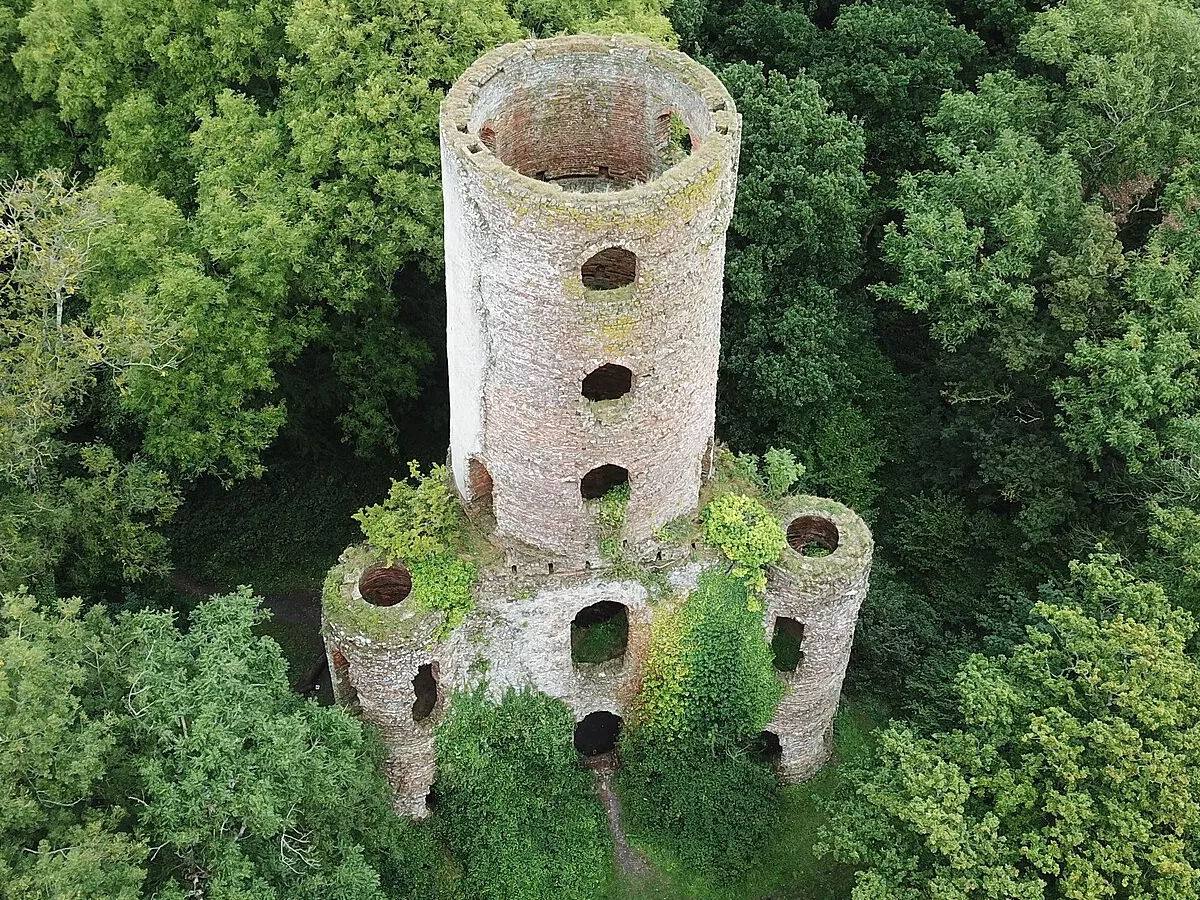
Image information
This is a representative image for this Daily News lesson.
Intro
Racton Monument, known locally as Racton Ruin, stands outside Chichester as one of Sussex’s most unsettling sights. Although its history is partly obscure, its decaying structure and reported supernatural encounters have made it a striking destination for Halloween travelers.
Vocabulary
| Word | Part of speech | Meaning | Example |
|---|---|---|---|
| remnant noun | noun | Meaning: A surviving trace or fragment of something that once existed more fully. | Example: The abandoned observatory is the last remnant of the region’s scientific ambition. |
| embellishment noun | noun | Meaning: An added detail that makes something more elaborate, vivid, or impressive, sometimes without adding factual substance. | Example: The historian resisted every romantic embellishment that lacked documentary support. |
| folly noun | noun | Meaning: A decorative building constructed primarily for visual effect rather than practical use. | Example: The aristocrat commissioned a Gothic folly to punctuate the distant landscape. |
| conclusive adjective | adjective | Meaning: Providing decisive evidence that settles an issue beyond reasonable doubt. | Example: The archival record contains suggestive clues but no conclusive explanation. |
| sinister adjective | adjective | Meaning: Suggesting danger, malevolence, or something troublingly unnatural. | Example: The apparently harmless ceremony acquired a sinister undertone after nightfall. |
| incidents noun | noun | Meaning: Distinct events or occurrences, especially ones that are noteworthy or troubling. | Example: The report documents several incidents that disrupted the otherwise orderly proceedings. |
| gutted adjective | adjective | Meaning: Stripped of its internal contents, fixtures, or structure. | Example: The gutted theatre retained its façade but had lost every original interior feature. |
| silhouette noun | noun | Meaning: The dark outline of an object seen against a lighter background. | Example: At dusk, the tower’s silhouette became sharply defined against the fading sky. |
The story
On the outskirts of Chichester, Racton Monument rises above the surrounding landscape as a tall, ruined remnant of an unexplained past. Known locally as Racton Ruin, the 24-meter structure is built of red brick and flint and is said to be among the most haunted places in Sussex. Its severe appearance, combined with its isolation and deterioration, gives it an atmosphere that requires little embellishment.
The building is a folly: a deliberately decorative structure whose purpose may be symbolic, picturesque, or simply entertaining rather than practical. Yet in Racton’s case, even that limited explanation remains incomplete. George Montagu Dunk, the second Earl of Halifax, commissioned the monument, but no conclusive account explains why. It may have served as a summerhouse, according to one interpretation, or as a viewing point from which ships approaching through the Solent could be observed.
That uncertainty has left room for a more sinister tradition to take hold. Racton Monument has been the site of numerous paranormal investigations, while reported incidents include sightings of a ghostly woman walking through the grounds. Visitors have also described unsettling sounds, including sudden laughter characterized as manic. Such accounts remain reports rather than established evidence, but they have become part of the monument’s identity and help explain its appeal to those seeking an eerie excursion.
Today, the folly is completely gutted and roofless, a condition that exposes both its architectural fragility and the hazards of exploring it. It stands on private land and is unsafe to enter. Nevertheless, the ruin remains readily visible from nearby footpaths, allowing people to appreciate its silhouette without crossing the boundary or placing themselves inside an unstable structure.
Racton Monument therefore offers a particularly concentrated version of the haunted-place experience: a distinctive landmark, an uncertain historical purpose, and stories that have outlasted the building’s original function. For Halloween travelers, its strongest attraction may lie precisely in that tension between what can be seen clearly and what can never be conclusively explained.
Warm-up questions
- What features can make an abandoned building seem atmospheric rather than merely neglected?
- Why might uncertainty about a landmark’s origins intensify public fascination with it?
Comprehension questions
- How does the article explain the term “folly”?
- What two possible functions have been proposed for the monument?
- What kinds of paranormal experiences have visitors reported?
- Why is entering the monument especially hazardous?
- How can visitors observe the ruin without entering it?
Opinion questions
- Does the monument’s uncertain purpose make it more compelling, or would firm historical evidence be preferable?
- Should destinations associated with paranormal stories actively promote those associations to tourists?
Further discussion
- How do architecture, landscape, and local storytelling interact when places acquire reputations as haunted?
- What ethical responsibilities should visitors observe when a celebrated landmark stands on private land and is structurally unsafe?
Writing prompt
- Write a critical travel feature explaining why Racton Monument’s appeal depends on the tension between documented history, physical decay, and unverifiable legend.