Texas Prosecutors May Seek Charges Against ICE Agent After Crash Injures Man
 By Emma Carter
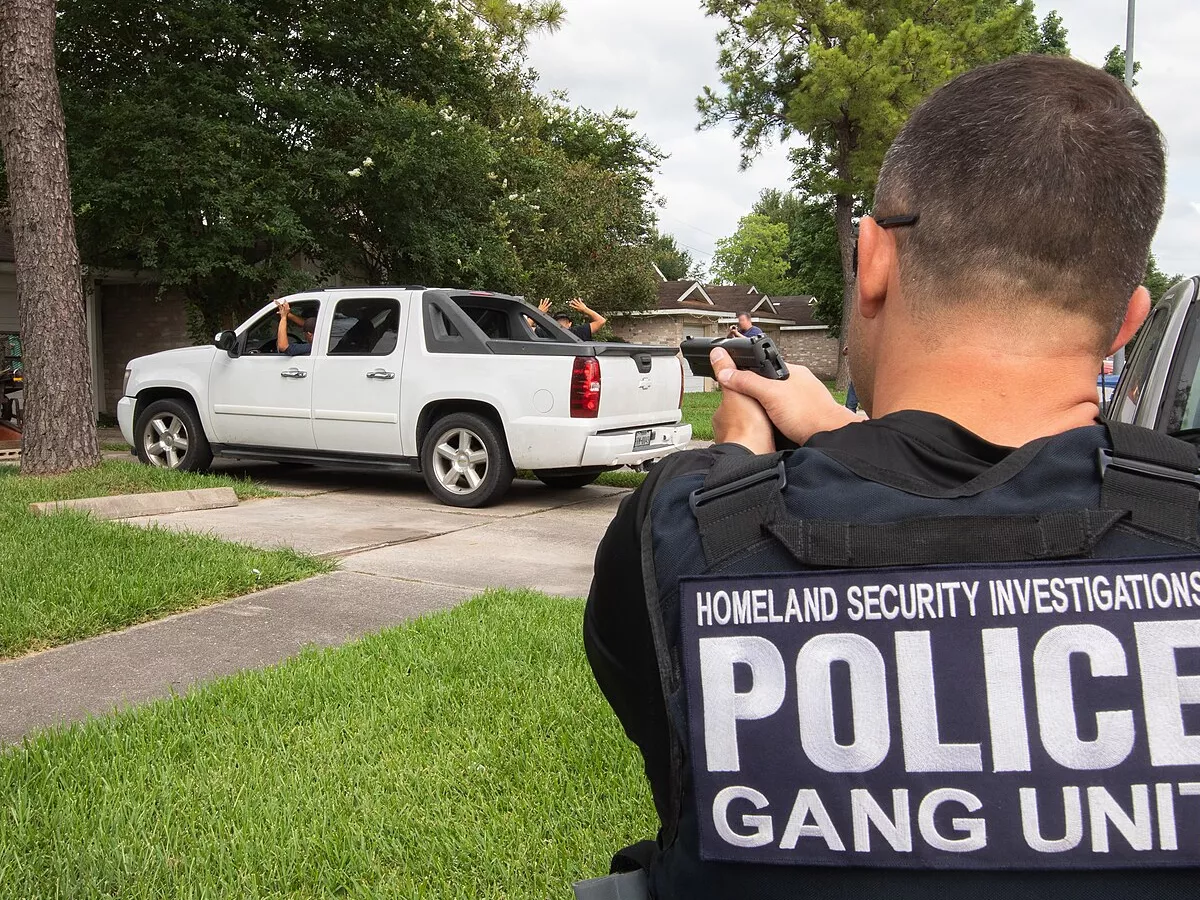
Image information
This is a representative image for this Daily News lesson.
Intro
A Harris County investigation has raised the prospect of criminal charges after Miguel Parra Hernandez was injured in a crash over the weekend.
Vocabulary
| Word | Part of speech | Meaning | Example |
|---|---|---|---|
| scrutiny noun | noun | Meaning: careful and critical examination, especially to assess legality, accuracy, or propriety | Example: The committee's decision will face intense scrutiny from independent auditors. |
| assessment noun | noun | Meaning: a considered evaluation or judgment based on available information | Example: The consultant's assessment identified weaknesses that the initial review had overlooked. |
| constitutes verb | verb | Meaning: forms or amounts to something, particularly in a formal or legally significant sense | Example: Silence in that context constitutes acceptance of the proposed terms. |
| accusation noun | noun | Meaning: a formal or explicit claim that someone has committed wrongdoing | Example: The accusation was serious, but the available evidence remained inconclusive. |
| distinction noun | noun | Meaning: a meaningful difference between two things that might otherwise be treated alike | Example: The distinction between criticism and defamation is legally consequential. |
| violation noun | noun | Meaning: an act of breaking a law, rule, agreement, or established principle | Example: The regulator found a clear violation of the industry's disclosure requirements. |
| judicial adjective | adjective | Meaning: relating to courts, judges, or the administration of justice through courts | Example: The dispute ultimately required judicial review of the agency's decision. |
| eventual adjective | adjective | Meaning: occurring or becoming known at a later stage, after preceding developments | Example: The eventual settlement reflected months of confidential negotiation. |
The story
Texas prosecutors may seek charges against an Immigration and Customs Enforcement agent after Miguel Parra Hernandez was injured in a crash over the weekend.
The Harris County district attorney said investigators from his office did not believe the crash was accidental. That conclusion is the central development in the case: it places the incident under possible criminal scrutiny rather than treating it simply as an unintended collision.
Hernandez was identified as the person injured in the crash. The potential charges concern an agent with Immigration and Customs Enforcement, widely known as ICE. ICE is a federal agency whose work includes enforcing immigration-related laws. Its involvement gives the case a wider public dimension, while the immediate legal question described by the district attorney remains the circumstances of the crash itself.
The district attorney’s statement does not constitute a criminal charge, a trial outcome, or a finding of guilt. Investigators can reach an assessment about an event while prosecutors separately determine whether the available evidence supports a formal accusation. A decision to seek charges would therefore mark a further legal step, not a conclusion already reached by a court.
In general, criminal investigations distinguish between conduct regarded as accidental and conduct that may have involved a violation of the law. That distinction can be especially important when an injury results from an encounter involving an official vehicle or a law-enforcement officer. It does not, by itself, establish the precise offense that prosecutors might pursue.
The case also illustrates the separate roles within the justice system. Investigators examine what happened and gather evidence; prosecutors evaluate whether that evidence meets the standard for bringing a case. Courts, if a case proceeds, determine responsibility through the judicial process. These stages are distinct, even when public attention focuses on the initial investigative finding.
For now, the verified point is that Harris County investigators do not regard the crash that injured Hernandez as accidental. The district attorney’s position means that prosecutors may consider charges against the ICE agent. Any eventual legal action would depend on the next decisions in that process.
Warm-up questions
- What distinctions should readers make before interpreting an investigation as proof of guilt?
- How might the involvement of a federal law-enforcement agency affect public attention to a local case?
Comprehension questions
- What development places the crash under possible criminal scrutiny?
- Why does the article describe a possible decision to seek charges as a further legal step?
- What broader significance does ICE's involvement give the case?
- How are investigators, prosecutors, and courts distinguished in the article?
- What is the article's verified point at the time of publication?
Opinion questions
- Should prosecutors publicly announce investigative assessments before deciding whether to file charges? Explain your position.
- Does an official's involvement justify heightened public scrutiny, or can it distort impartial judgment?
Further discussion
- How might public institutions preserve due process while communicating about allegations involving law-enforcement personnel?
- What practical and ethical difficulties arise when an investigation attracts attention before the evidence is fully tested?
Writing prompt
- Write a carefully qualified analysis explaining how the article separates investigative assessment, prosecutorial discretion, and judicial responsibility.