PTE test names identify different accepted purposes and, in some cases, different assessment formats or reporting arrangements. Start with the organisation or authority that will use your result. Its exact instructions are more important than choosing a familiar name, the cheapest appointment or the test a friend recently took.
PTE Academic
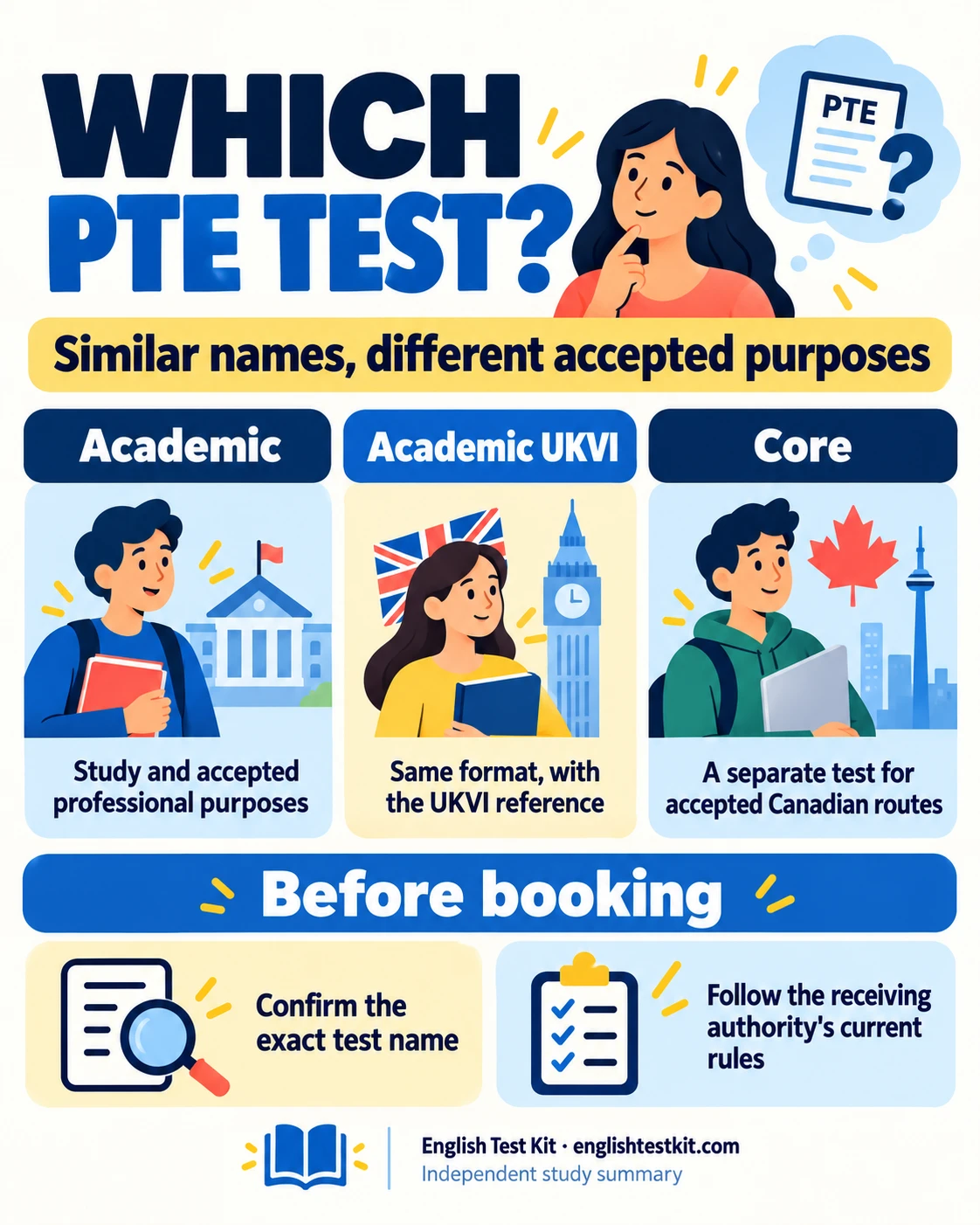
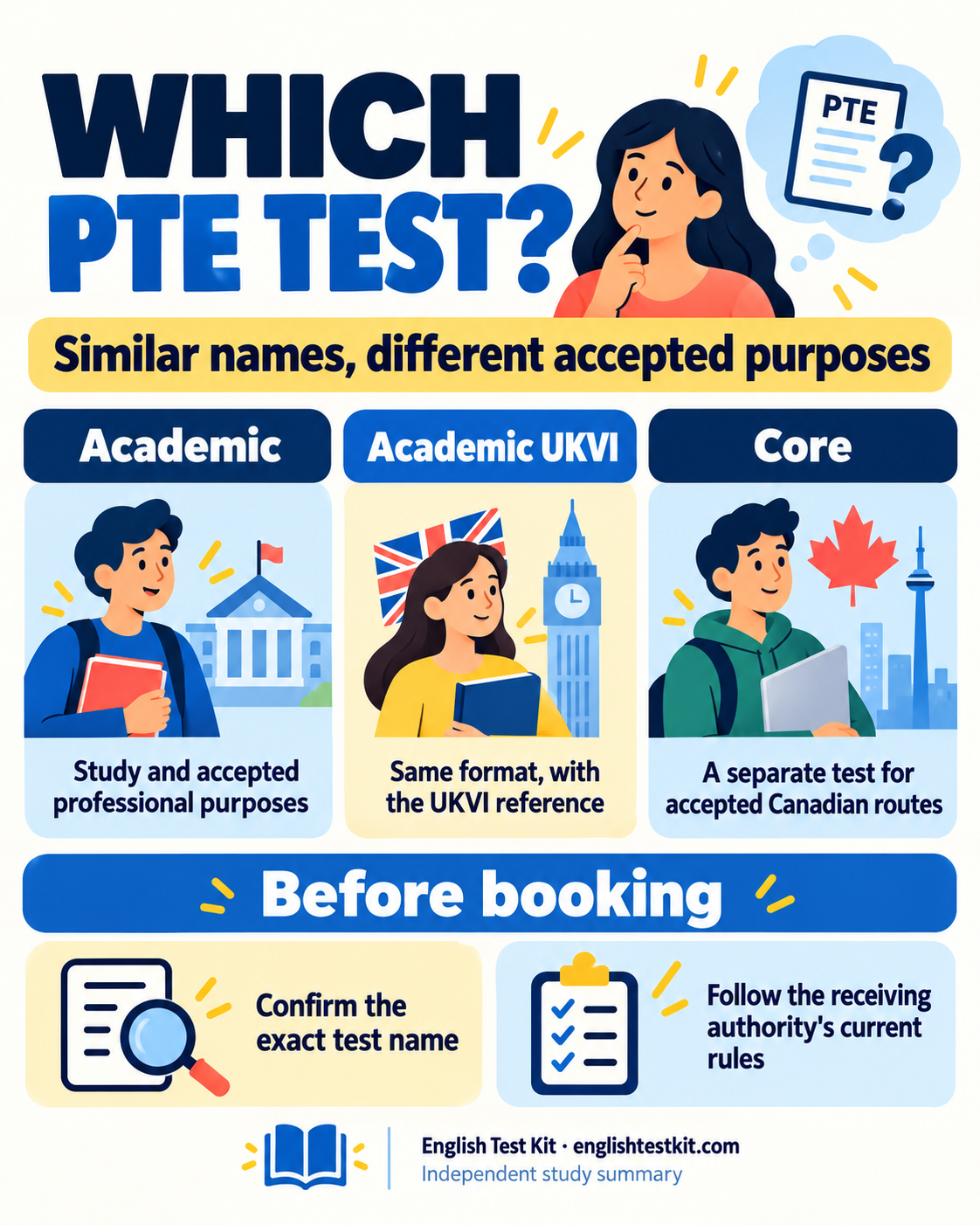
PTE Academic is primarily used to demonstrate English ability for study at universities, colleges, and other institutions that accept it. It assesses speaking, writing, reading, and listening. Acceptance does not mean every program has the same score requirement.
PTE Academic UKVI
Pearson says PTE Academic and PTE Academic UKVI use the same test format. UKVI produces a Unique Reference Number for applications that require a Secure English Language Test result. The difference matters when your UK route specifies an approved SELT and reference number.
PTE Core
PTE Core is a different test designed for certain Canadian immigration applications, including permanent residence and citizenship routes. It is not a substitute for PTE Academic where a school or program specifically requires the Academic test.
A safe three-check decision
Use the official government or institution instructions for the application you are making. Test names can sound similar even when their accepted purposes differ.
Identify the exact program, visa, or immigration category.
Check the required test name, provider, and accepted score format.
Confirm the required overall score, individual skill minimums, result validity, and booking location.
This guide is general information, not immigration or admissions advice. Requirements can change; the receiving government or institution is the authority for your application.
Separate purpose, format and reporting
PTE Academic is used for study and other purposes where it is accepted. Academic UKVI uses the Academic format but provides the reference needed for specified UK routes. PTE Core is a separate assessment designed for accepted Canadian immigration purposes. Similar branding does not mean that a result can be moved freely between every purpose.
These distinctions describe the provider's test families. They do not establish eligibility for a particular course or immigration route. For an actual decision, follow the current receiving institution or government instructions and the provider's registration guidance for your location.
Three fictional examples of checking the name
A learner applying to a course finds an official requirement that explicitly lists PTE Academic. The useful next step is to record its overall and skill minimums, accepted result dates and submission method. Booking Core because it is also computer-based would not satisfy the wording by itself.
Another learner follows a route whose official instructions specify an approved UKVI test and reference. The important check is the exact booking and reporting arrangement required for that route. A similar-looking score report should not be assumed to include every required reference or approval.
A third learner is considering a Canadian application for which the current authority instructions list Core. That learner should prepare with Core's own format and task guidance rather than treating Academic materials as a complete rehearsal. All three examples are invented decision scenarios; the actual authority determines what is accepted.
Ask useful questions before registration
Write down the precise application purpose and find the official test requirement for it. Confirm the accepted test name, required scores, date policy, approved location or delivery conditions, and reporting reference where applicable. If the page is unclear, ask a question that includes your exact course or route rather than asking only whether “PTE is accepted”.
Keep the response and the relevant official page together. Requirements can differ between programmes or change for a new intake. Advice from another applicant can alert you to something worth checking, but it is not a substitute for the current rule that applies to you.
Match practice after making the choice
General English practice can help across test families, but a timed rehearsal needs the correct tasks, instructions and response conditions. Learn the source and output for each task, then identify whether your main difficulty is comprehension, form, organisation or delivery. This avoids spending most of your time becoming familiar with a format you will not take.
For example, a summary exercise can develop useful selection skills without proving that you have rehearsed every task in the booked test. Label its purpose honestly and use official familiarisation material to fill the format gaps.
A final booking checklist
Before paying, check the full test name, recipient, score conditions, accepted result dates, required reporting reference and appointment details. Confirm that the registration matches the requirement you saved. If your application purpose changes, repeat the comparison instead of assuming the earlier test choice remains suitable. This small administrative step can protect a substantial amount of preparation time.
Save your one-page study summary