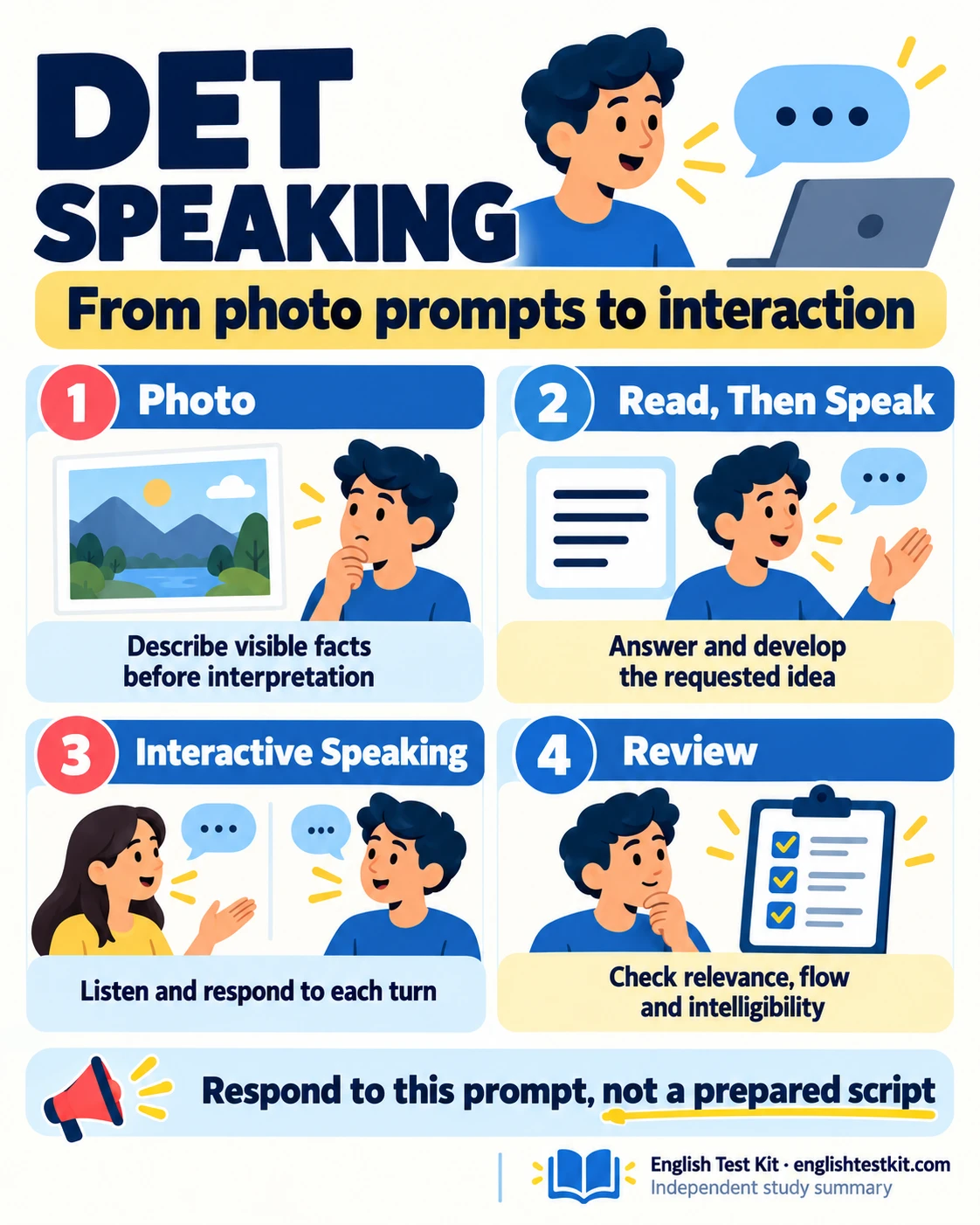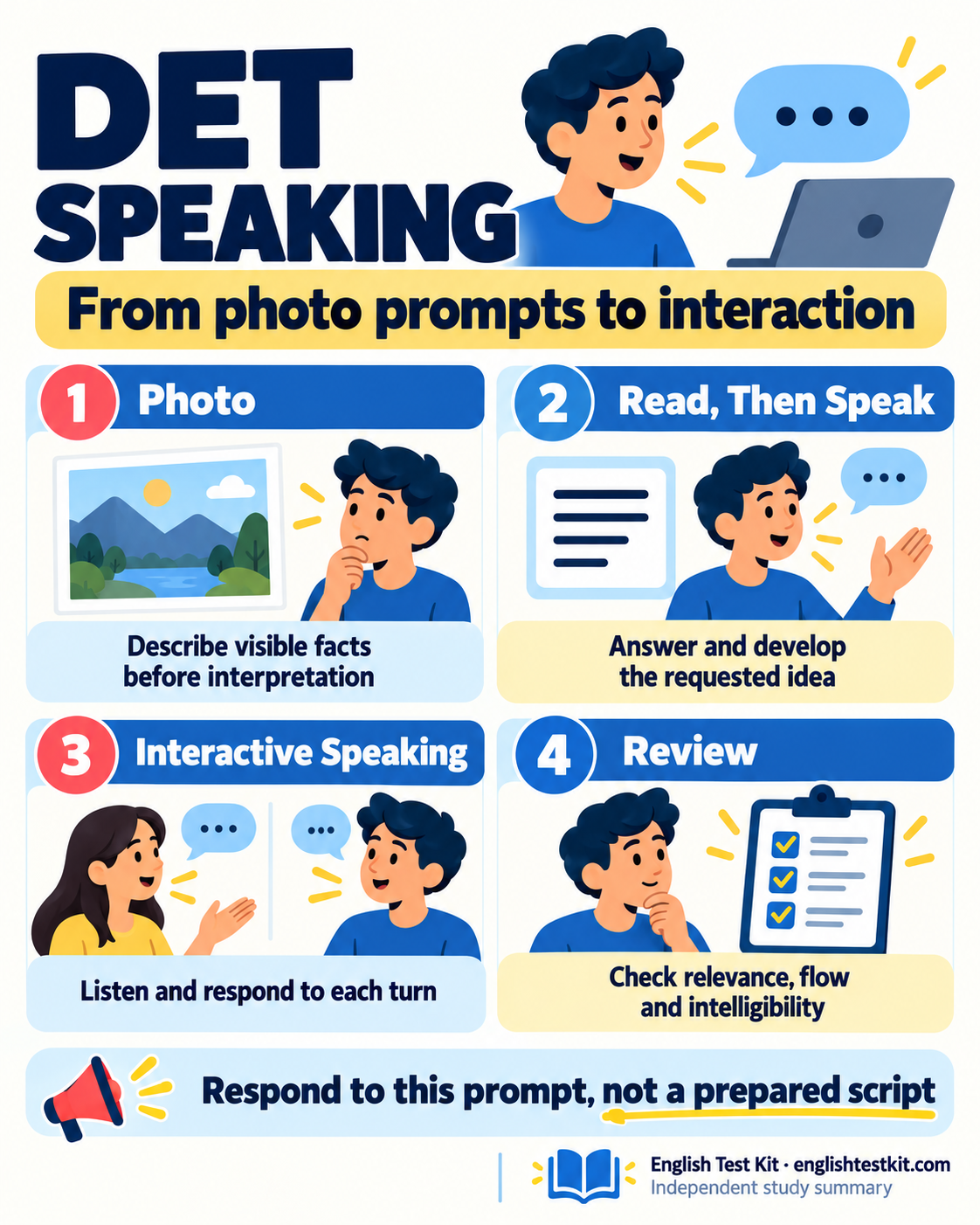
The Duolingo English Test uses several speaking situations, so preparation should build a response method for each one. Describe what is visible in a photo, develop an answer to a written prompt, and respond naturally when an interactive question changes direction. Clear, relevant speech matters more than delivering a memorised introduction.
Speak with a visible line of thought
The current speaking tasks include Speak About the Photo, Read Then Speak, Interactive Speaking, and a Speaking Sample. Each task changes the prompt or interaction, but every strong response makes the main idea easy to follow.
Interactive Speaking
Interactive Speaking is a set of six to eight questions. You hear a virtual interlocutor and usually have about 35 seconds for each answer. The task replaced Listen Then Speak in the 2025 format update.
What to practise
Describe the important people, actions, setting, and relationships in a photo before adding an interpretation.
For a read-and-speak prompt, identify the question, give a clear answer, and support it with one or two relevant reasons.
For an interactive exchange, answer the question you heard and let the previous turn guide the next one.
Record practice answers and listen for pace, unfinished words, repeated fillers, and pronunciation that changes meaning.
A short answer can still sound complete when it has a clear point, a reason, and a specific example.
Prepare for the current task set
Use current official materials when choosing practice questions. Older preparation videos may describe tasks that have been replaced, or use names and timings from an earlier version. Check the current task page before copying a routine, especially for Interactive Speaking.
For each current task, identify the input, preparation opportunity, response instructions and time shown. Practise with those directions rather than applying one length target to every recording. The speaking sample also deserves preparation: current scoring guidance treats it as an assessed response, and institutions may receive it with your result.
Describe a photo with an evidence-first sequence
Start with the central scene, then explain the most important actions and relationships. For an original practice image of a crowded bus stop, you might say: “Several people are waiting beside a bus shelter. A woman near the timetable is pointing toward the road while another passenger checks a phone.”
This gives a listener a coherent picture. Listing “people, road, phone, sign” does not explain how those details connect. Avoid presenting guesses as facts. You can say that people “appear to be waiting for a bus”, but cannot know their destination, occupation or private conversation from the image alone.
Answer a written prompt before adding background
For Read Then Speak practice, turn the prompt into a direct first sentence. If asked whether libraries should offer more digital services, state your view, explain one useful service, and show why it matters to a particular user. An example involving an evening worker accessing materials after closing is more informative than saying technology is important several times.
Do not spend most of the response defining familiar words or announcing what you plan to discuss. Use preparation time to select a point and supporting detail mentally. A brief conclusion is useful only when it completes the idea; repeating the opening sentence adds little.
Let an interactive follow-up change your answer
Interactive Speaking checks your ability to respond to the question you hear. Suppose an original practice exchange begins with a preference for group study and then asks about a disagreement in a group. The follow-up calls for handling disagreement, not another general list of group-study benefits.
You could explain that you would ask each person to justify an answer using the source, compare the evidence, and agree on a next step. Link your response to the new question while keeping it understandable on its own. Practise follow-ups you have not seen in advance so that you develop flexibility rather than a sequence of rehearsed speeches.
Record, diagnose, and try a different prompt
Review a practice recording twice. On the first listen, check relevance, development and whether the answer reaches a clear stopping point. On the second, notice long pauses, repeated fillers, rushed endings and words that are difficult to understand. An accent is not a reason to imitate another speaker; focus on intelligibility.
Choose one change, such as grouping words into shorter phrases or explaining an example sooner. Retry briefly, then answer a new prompt using the improved habit. Keep the practice environment compatible with the certified rules: use your own responses, practise without notes, and do not depend on another person or a reference tool during the test.
Save your one-page study summary