IMF-World Bank Meetings Examine Global Risks and AI’s Potential Benefits
 By Emma Carter
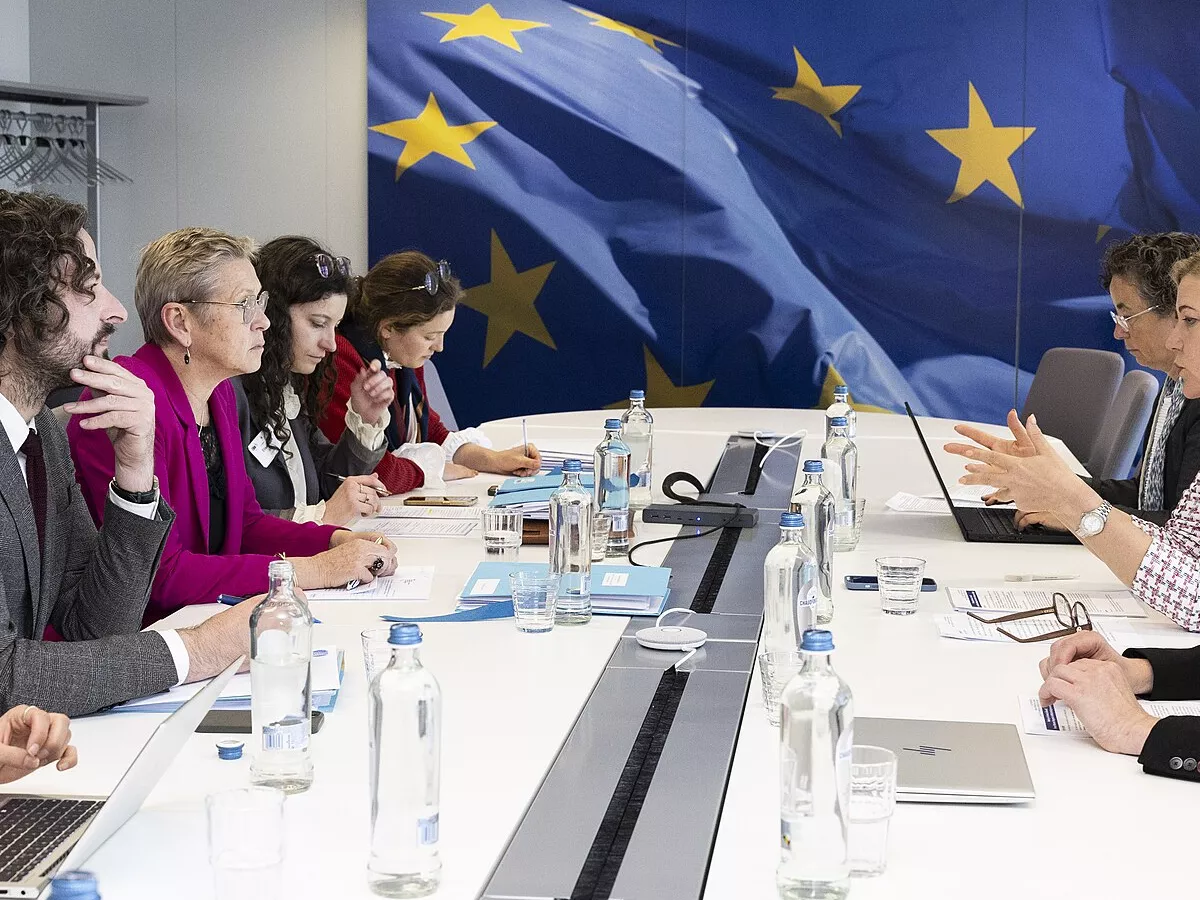
Image information
This is a representative image for this Daily News lesson.
Intro
Meetings involving the International Monetary Fund and the World Bank are focusing on global risks alongside the possible benefits of artificial intelligence.
Vocabulary
| Word | Part of speech | Meaning | Example |
|---|---|---|---|
| safeguards noun | noun | Meaning: measures designed to prevent harm, misuse, or undesirable outcomes | Example: Independent audits can serve as safeguards against opaque algorithmic decisions. |
| innovation noun | noun | Meaning: the development or introduction of new ideas, methods, or technologies | Example: Responsible innovation requires experimentation alongside careful evaluation. |
| malfunction noun | noun | Meaning: a failure to operate correctly or as intended | Example: A software malfunction temporarily disrupted the hospital’s scheduling system. |
| deployed adjective | adjective | Meaning: put into practical use or operation | Example: The newly deployed system is being monitored for unexpected effects. |
| accountability noun | noun | Meaning: responsibility for actions, decisions, and their consequences | Example: Public accountability is essential when automated systems influence eligibility decisions. |
| oversight noun | noun | Meaning: careful supervision intended to ensure that actions remain responsible and compliant | Example: Regulatory oversight can identify systemic risks before they become widespread. |
| consequences noun | noun | Meaning: results or effects that follow from an action or situation | Example: Policymakers should assess long-term consequences before authorizing large-scale deployment. |
The story
Meetings involving the International Monetary Fund and the World Bank are examining global risks and the possible benefits of artificial intelligence, according to coverage by PBS NewsHour. The discussion places AI within a broader economic and international context, where technological change can create opportunities while also introducing risks that institutions may need to address.
Kristalina Georgieva, managing director of the International Monetary Fund, highlighted the difficulty of designing safeguards while innovation is moving quickly. She described the challenge through the image of a flying car: society may be eager to develop an impressive new technology, but it must also establish barriers strong enough to prevent a malfunction from causing deaths. Her point was that protection cannot be treated as an afterthought once a technology is already widely deployed.
Artificial intelligence can refer to computer systems that perform tasks commonly associated with human intelligence, such as recognizing patterns, processing language, or generating content. In economic settings, such systems may improve productivity, support research, and help organizations analyze large quantities of information. These potential advantages help explain why governments, businesses, and international institutions are paying close attention to AI.
At the same time, rapid adoption can raise difficult questions about safety, accountability, and the distribution of benefits. If systems are introduced faster than effective rules or monitoring mechanisms can be developed, mistakes may spread widely before they are detected. Safeguards may therefore include technical testing, oversight, and clear responsibility for decisions influenced by automated systems. The appropriate balance can vary according to how a system is used and how serious its possible consequences are.
The meetings’ focus reflects an effort to consider both sides of that balance. Georgieva’s analogy suggests that technological progress and public protection should advance together, rather than being treated as competing goals. The package does not specify the meeting’s location or provide further details about particular policies discussed.
Warm-up questions
- What safeguards should accompany rapidly advancing technologies?
- When might technological innovation create benefits and risks simultaneously?
Comprehension questions
- What central policy challenge does the article identify regarding artificial intelligence?
- How does Georgieva’s flying-car analogy clarify the timing of protection?
- Why are governments, businesses, and international institutions paying close attention to AI?
- What could happen if adoption outpaces the development of rules and monitoring?
- What overall position does the meetings’ focus convey about progress and protection?
Opinion questions
- Should governments require safeguards before deploying powerful AI systems, even if regulation slows innovation?
- Which potential AI benefit described in the article seems most valuable, and why?
Further discussion
- How might accountability differ when an automated system supports a decision rather than making it independently?
- What criteria should determine whether a particular AI application requires stricter oversight?
Writing prompt
- Write a 250-word policy brief explaining how governments can promote AI innovation while reducing serious risks.