Researchers are tracking Monarch butterflies to learn more about their journey
 By Emma Carter
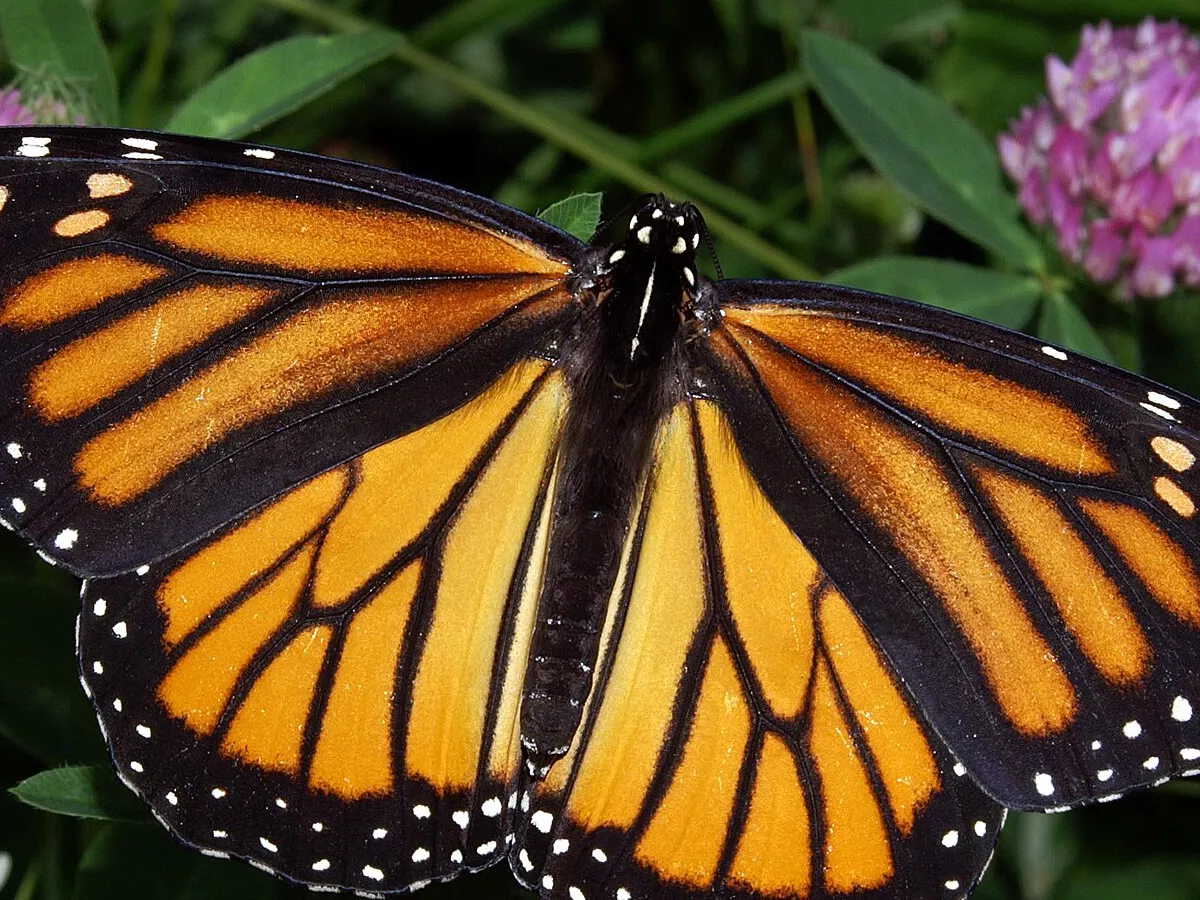
Image information
This is a representative image for this Daily News lesson.
Intro
Researchers across North America are attaching tiny transmitters to Monarch butterflies as the insects begin their migration to Mexico. The project is intended to reveal more about the route and the difficulties the butterflies encounter along the way.
Vocabulary
| Word | Part of speech | Meaning | Example |
|---|---|---|---|
| transmitters noun | noun | Meaning: small devices that send information about an object’s location or movement | Example: The researchers attached lightweight transmitters to the birds before releasing them. |
| migration noun | noun | Meaning: the seasonal movement of animals from one region to another | Example: The whales’ annual migration is influenced by changes in water temperature. |
| encounter verb | verb | Meaning: to experience or come across something, especially unexpectedly or during a process | Example: Hikers may encounter rapidly changing weather in the mountains. |
| isolated adjective | adjective | Meaning: separate from other events or observations rather than part of a connected pattern | Example: A single isolated complaint cannot establish a reliable trend. |
| significant adjective | adjective | Meaning: important enough to influence understanding or interpretation | Example: The discovery represents a significant advance in climate research. |
| precisely adverb | adverb | Meaning: in an exact and accurate manner | Example: The survey was designed to measure precisely how residents used public transport. |
| disconnected adjective | adjective | Meaning: lacking a clear relationship or continuity with other parts | Example: The report turns several disconnected observations into a coherent explanation. |
The story
Researchers across North America are attaching tiny transmitters to Monarch butterflies as the insects begin their migration to Mexico. The project is designed to provide a clearer picture of the butterflies’ journey, including where they stop and which challenges they encounter along the way.
A transmitter is a small device that can help researchers follow the movement of an animal. Attached to a butterfly, it may offer information that is difficult to obtain by observing the insects individually. Instead of seeing only isolated moments, researchers can use tracking data to develop a broader understanding of the route.
The timing of the work is significant because the butterflies are beginning a major stage of their seasonal movement. Migration involves traveling from one region to another, often through several locations. For Monarch butterflies, the destination identified in this project is Mexico, while the researchers are working across North America to learn more about the passage between those points.
The scientists are particularly interested in the butterflies’ stops. These pauses may form an important part of the journey, yet the project’s purpose is to determine more precisely where they occur and what conditions the insects face there. Tracking could therefore help connect the butterflies’ movement with the practical difficulties of traveling such a long route.
The effort also illustrates how small-scale technology can support biological research. A device that is tiny enough to be carried by a butterfly may allow scientists to investigate movement without relying solely on occasional sightings. The resulting information could make the migration easier to understand as a continuous journey rather than a series of disconnected observations.
For now, the researchers’ stated goal is to learn more about the route, its stopping points, and its challenges. As the Monarchs travel toward Mexico, the transmitters are intended to make parts of that journey visible to the people studying them.
Warm-up questions
- What information would be most valuable to researchers studying an animal’s migration? Explain why.
- What advantages and limitations might tiny tracking devices have in biological research?
Comprehension questions
- What are the researchers attaching to Monarch butterflies, and why?
- How can tracking data improve researchers’ understanding of the butterflies’ movement?
- Why is the timing of the research considered significant?
- What specifically do scientists want to learn about the butterflies’ stops?
- How might the project change the way migration is understood?
Opinion questions
- Do the potential benefits of tracking animals justify attaching devices to them? Discuss the ethical considerations.
- Which aspect of migration would you find most compelling to investigate: routes, stopping points, or environmental challenges?
Further discussion
- How could continuous movement data influence conservation policies for migratory species?
- What other technologies could complement transmitters without replacing direct observation?
Writing prompt
- Write a formal report explaining how the tracking project could deepen scientific understanding of Monarch migration and identifying possible limitations of the method.