Scientists Study Jonathan the Tortoise’s Genome for Clues to Longevity
 By Emma Carter
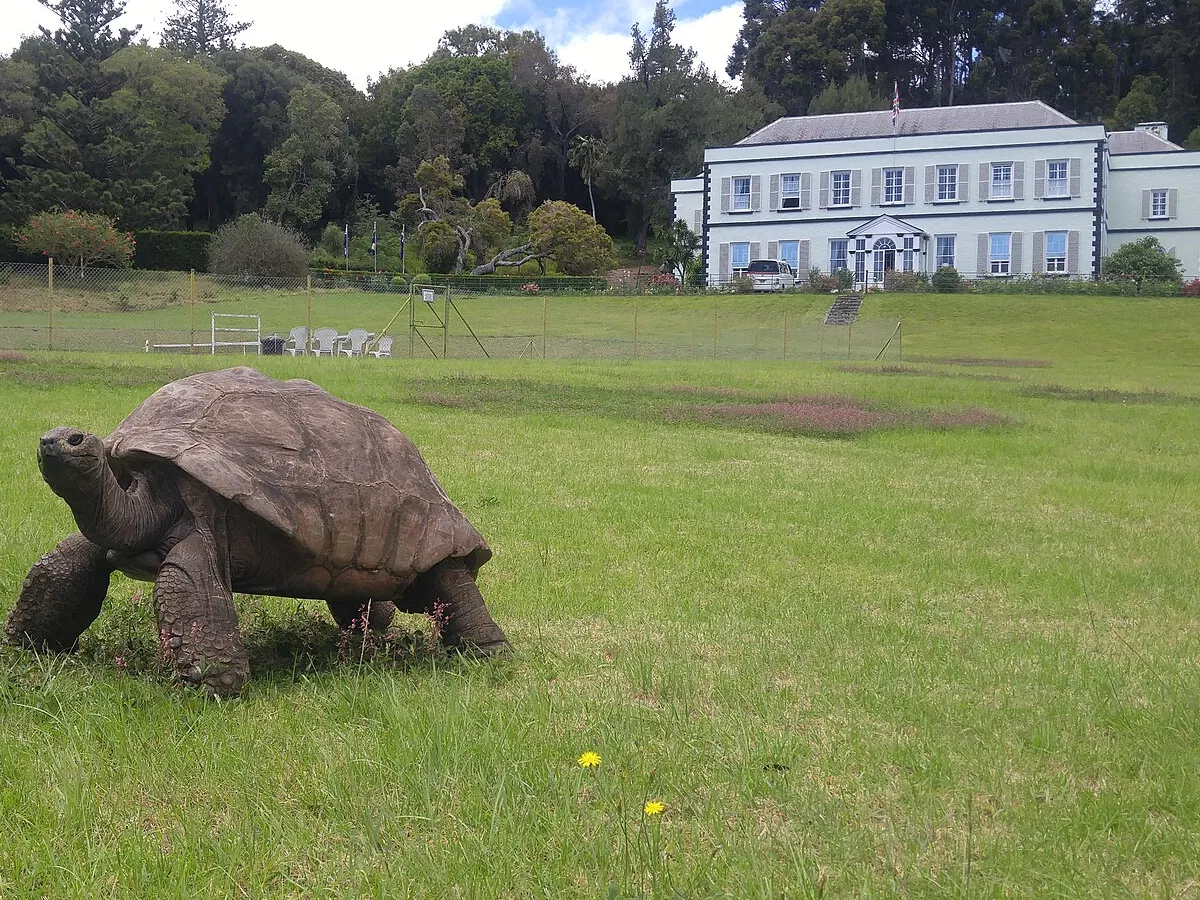
Image information
This is a representative image for this Daily News lesson.
Intro
Researchers are examining the genome of Jonathan, a 194-year-old tortoise, to investigate the factors connected with his exceptional longevity.
Vocabulary
| Word | Part of speech | Meaning | Example |
|---|---|---|---|
| extraordinary adjective | adjective | Meaning: Very unusual or remarkable, especially because it exceeds ordinary expectations. | Example: The expedition required extraordinary patience because weather conditions changed constantly. |
| uncovering verb | verb | Meaning: Discovering information or facts that were previously unknown or concealed. | Example: The archive is uncovering evidence of how coastal communities adapted to repeated storms. |
| relevant adjective | adjective | Meaning: Directly connected with or useful for understanding a particular issue. | Example: Only the evidence relevant to the central hypothesis was included in the report. |
| substantially adverb | adverb | Meaning: To a considerable degree or by a significant amount. | Example: The revised policy substantially reduced the time required for processing applications. |
| distinctive adjective | adjective | Meaning: Clearly different from others in a way that makes something recognizable or notable. | Example: The region’s distinctive architecture reflects several centuries of cultural exchange. |
| meaningful adjective | adjective | Meaning: Significant or genuinely informative in relation to a particular question or purpose. | Example: The researchers found meaningful differences between the two treatment groups. |
| associated adjective | adjective | Meaning: Connected with something, especially through a possible relationship or correlation. | Example: The survey examined symptoms associated with prolonged workplace stress. |
The story
Jonathan, a 194-year-old tortoise described as the world’s oldest land animal, is the subject of a scientific study into extraordinary longevity. Researchers are examining his genome in the hope of uncovering clues to how he has lived for so long.
A genome is the complete collection of genetic material in an organism. It contains instructions that influence how a living thing develops and functions. By studying Jonathan’s genome, researchers can look for features that may be relevant to his unusually long life. The investigation is focused on the biological basis of longevity rather than on his age alone.
Jonathan’s case is notable because he is not merely old by everyday standards; at 194, he represents an exceptional example among land animals. His apparent ability to age more slowly than expected gives scientists an unusual opportunity to examine a living animal with a remarkably long lifespan.
The research belongs to a wider effort to understand aging, a process that differs substantially among species. Animals do not all grow older at the same pace, and long-lived species can provide useful points of comparison. Such comparisons may help researchers explore why some organisms remain alive for far longer than others.
Still, a genome is not a simple instruction manual for a long life. Genetic information can be studied for possible patterns, but interpreting those patterns requires care. A distinctive feature in one animal does not, by itself, establish why that animal has survived for so many years. Researchers must determine which details are potentially meaningful and which are simply part of Jonathan’s individual biology.
For that reason, the study should be understood as an investigation rather than a promise of immediate answers. Its value lies in the possibility that Jonathan’s genetic information could deepen scientific understanding of longevity. As researchers examine the genome of this exceptionally old tortoise, they are seeking a clearer view of the biological factors that may be associated with aging more slowly than expected.
Warm-up questions
- What biological or environmental factors might help an animal live exceptionally long?
- Why might studying one unusually old animal be useful but also scientifically limited?
Comprehension questions
- What are researchers examining in order to investigate Jonathan’s longevity?
- What does a genome contain, according to the article?
- Why is Jonathan’s case an unusual research opportunity?
- Why must researchers interpret Jonathan’s genetic patterns cautiously?
- How does the article characterize the study’s likely immediate outcome?
Opinion questions
- Do you think studying exceptional individuals can meaningfully advance scientific knowledge? Why or why not?
- Should researchers prioritize unusual animals such as Jonathan when investigating human aging?
Further discussion
- How could researchers distinguish a genuinely important genetic pattern from an incidental individual trait?
- What ethical considerations might arise when studying exceptionally old animals over many years?
Writing prompt
- Write a reasoned essay explaining how Jonathan’s genome could contribute to research on aging while addressing the study’s limitations.