The Holei Sea Arch, a Centuries-Old Hawaii Wonder, Crumbles Into the Pacific
 By Emma Carter
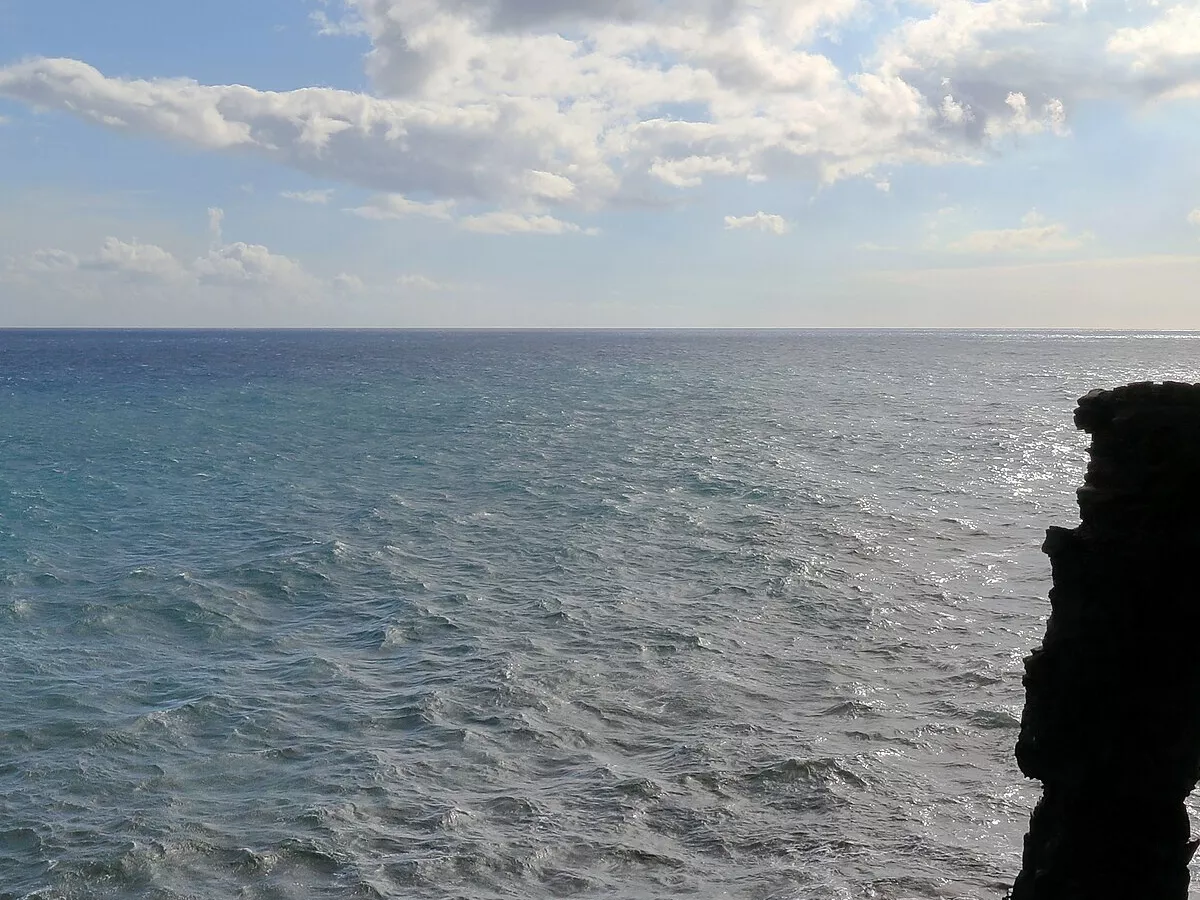
Image information
This is a representative image for this Daily News lesson.
Intro
The loss of the Holei Sea Arch changes a recognizable feature of Hawaii’s volcanic coast and illustrates the impermanence of exposed natural formations.
Vocabulary
| Word | Part of speech | Meaning | Example |
|---|---|---|---|
| disintegrated verb | verb | Meaning: broke apart into smaller pieces or completely lost its structure | Example: The ancient wall disintegrated after years of exposure to freezing temperatures. |
| exposed adjective | adjective | Meaning: left open to the effects of weather or other external forces | Example: The exposed hillside was especially vulnerable to landslides after heavy rain. |
| endured verb | verb | Meaning: continued to exist or function despite difficulty or damaging conditions | Example: The old bridge endured decades of traffic before engineers replaced it. |
| solidifies verb | verb | Meaning: becomes firm or solid, especially after changing from a liquid state | Example: The material solidifies rapidly when it comes into contact with air. |
| elevated adjective | adjective | Meaning: raised above the surrounding surface or level | Example: The elevated walkway protects visitors from seasonal flooding. |
| vulnerable adjective | adjective | Meaning: susceptible to harm, damage, or attack | Example: Small communities are particularly vulnerable to disruptions in transportation. |
| unaltered adjective | adjective | Meaning: remaining in its original condition without significant modification | Example: The preserve protects an unusually unaltered stretch of coastline. |
The story
The Holei Sea Arch, a centuries-old lava formation in Hawaii, has disintegrated into the Pacific. The National Park Service said the 90-foot rock formation came apart while a tropical storm was moving through the area.
For people who knew the arch as part of Hawaii’s coastal scenery, its disappearance marks an immediate and visible change. Natural landmarks can seem permanent because they remain familiar across many years, yet their survival depends on the continuing strength of the rock from which they are formed. In this case, a feature that had endured for centuries no longer stands.
The arch was made of lava rock, a material created when molten rock cools and solidifies. Hawaii’s volcanic landscapes contain many such formations, although each one is shaped by its particular exposure to the sea and weather. Along an open coast, rain, wind, salt water, and waves can gradually affect the surface and internal weaknesses of rock.
In general, a sea arch develops when erosion creates an opening through a coastal mass of rock, leaving an elevated span above the water. Its shape may look solid and balanced, but it is the result of a long process rather than a fixed structure. As the surrounding coast continues to change, an arch can become narrower or less stable until it eventually collapses.
The tropical storm’s presence provides the immediate context for the Holei Sea Arch’s disintegration. Stormy conditions can bring stronger winds, rougher water, and more forceful wave action to a shoreline. That does not make every coastal change predictable, but it helps explain why exposed rock formations are vulnerable during severe weather.
The event is also a reminder that natural attractions are not preserved in the same way as buildings or museum objects. Their value often lies in their unaltered form and in the processes that created them. When such a formation disappears, the landscape does not simply return to an earlier state; it takes on a new form, shaped by the same volcanic and coastal forces that made the arch possible.
Warm-up questions
- What natural landmark have you encountered that seemed permanent, and what might threaten it?
- Why might people value a landscape more when it remains relatively untouched?
Comprehension questions
- What immediate change did the arch’s disappearance create for people familiar with the coast?
- How was the lava rock formed?
- What long-term process produces a sea arch?
- Why is the tropical storm relevant to the arch’s collapse?
- How does the landscape change after such a formation disappears?
Opinion questions
- Should authorities attempt to preserve visually important natural formations, or should they accept their geological transformation?
- Does the disappearance of a familiar landmark diminish a place’s identity, or can it deepen awareness of environmental change?
Further discussion
- How might tourism, local memory, and conservation policy respond differently to the loss of a natural landmark?
- What distinctions should societies draw between protecting natural processes and preserving particular appearances?
Writing prompt
- Write a reasoned response explaining what the Holei Sea Arch’s collapse reveals about permanence, environmental forces, and human expectations.