
Kent is having a champagne moment: ‘English wine has gone from a joke to world-class’
 By Emma Carter
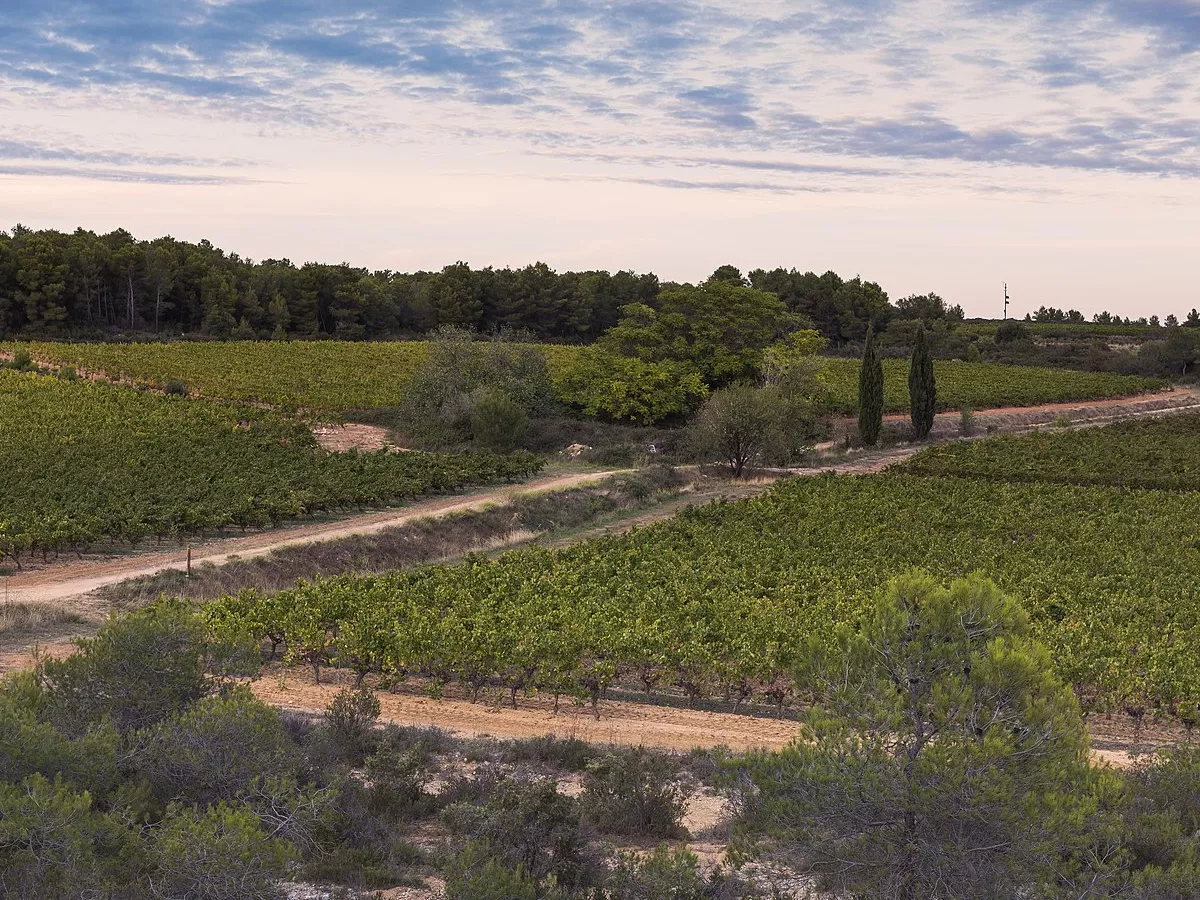
Image information
This is a representative image for this Daily News lesson.
Intro
A Guardian travel feature published on September 12, 2026, places Kent and English wine at the centre of a story about the changing image of English wine.
Vocabulary
| Word | Part of speech | Meaning | Example |
|---|---|---|---|
| published verb | verb | Meaning: made available to the public, especially through an official publication | Example: The journal published a carefully qualified analysis of the policy’s consequences. |
| headline noun | noun | Meaning: the prominent title introducing a newspaper or magazine article | Example: The headline captured public attention while concealing the report’s qualifications. |
| notable adjective | adjective | Meaning: worthy of attention because it is significant or distinctive | Example: The study recorded a notable improvement in participation among older adults. |
| dismissive adjective | adjective | Meaning: showing that something is regarded as unimportant, inferior, or unworthy of consideration | Example: Her dismissive response overlooked several legitimate concerns raised by the committee. |
| independently adverb | adverb | Meaning: in a manner that is separate from outside confirmation or influence | Example: The findings should be independently verified before they inform public policy. |
| classified verb | verb | Meaning: categorized or assigned to a particular group or type | Example: The archive classified the documents according to their historical significance. |
| accompanying adjective | adjective | Meaning: provided or appearing together with something else | Example: The accompanying notes clarify the limitations of the experimental design. |
The story
The Guardian has published a travel feature titled “Kent is having a champagne moment: ‘English wine has gone from a joke to world-class’.” The headline places Kent and English wine at the centre of the article and uses the idea of a “champagne moment” to suggest that the region is associated with a notable change in how English wine is viewed.
The verified package, however, contains no further reporting from the feature. It does not identify a vineyard, producer, wine, tasting, visitor attraction, business or particular community in Kent. Nor does it specify which part of the county provides the setting. Those details cannot be supplied safely from the available material.
The headline also contrasts an earlier, dismissive view of English wine with a present description of it as “world-class”. That contrast is important to the story’s framing, but the package does not establish it as an independently demonstrated conclusion. There are no supporting quotations, awards, production figures, comparisons, technical details or accounts of changing visitor numbers. The phrase should therefore be understood as part of the headline’s presentation, rather than expanded into a wider claim about the wine industry.
The feature was published by The Guardian on September 12, 2026, and is classified within the travel-experiences category. The available source information supplies no additional names, dates, statistics, organizations or events connected with the report. As a result, the article’s confirmed scope remains limited: it is a Guardian travel feature concerning Kent and English wine, with the headline offering a particular interpretation of the subject.
The accompanying photograph is credited to Chris Jackson/Getty Images. No description of the image is provided, so its content cannot be inferred from the credit. A fuller account of the places, people and evidence behind the feature would require access to the verified article text or a broader source package.
Warm-up questions
- What can a newspaper headline imply without explicitly proving its central claim?
- How might travel journalism shape perceptions of a region’s cultural identity?
Comprehension questions
- What subject does the Guardian travel feature concern?
- What interpretive function does the phrase “champagne moment” serve?
- Why can’t the article safely identify a particular vineyard or producer?
- How should the phrase “world-class” be interpreted in this package?
- What information would be needed for a fuller account of the feature?
Opinion questions
- Do you think headlines should explicitly distinguish interpretation from verified evidence? Why or why not?
- How persuasive do you find travel features that rely primarily on evocative framing?
Further discussion
- What evidential standards should journalists meet when describing a cultural shift in reputation?
- How might the absence of specific places, people, and statistics affect a reader’s trust?
Writing prompt
- Write a balanced critical response explaining what the article establishes, what it suggests, and what remains unverifiable.
Practice this story
4 testsSources
Topics
-

Travel & Experiences
Qantas’s New York-to-Sydney ‘Project Sunrise’ Flights to Take Off in 2028
Sep 23, 2026 2 min read C1 -

Travel & Experiences
The Guardian identifies a UK autumn travel feature, but supplies no outing details
Sep 8, 2026 2 min read C1 -
Travel & Experiences
Share a tip on a wellness experience in the UK and Europe
Sep 22, 2026 3 min read C2 -

Travel & Experiences
On Sweden’s Kungsleden Trail, a Hike Becomes an Encounter With Reindeer and Shared Wonder
Sep 17, 2026 3 min read C2 -

Travel & Experiences
A taste of home: discovering Sweden’s local food heroes
Sep 14, 2026 2 min read B2 -
Travel & Experiences
Air-Traffic Control Problem Disrupts More Than 2,000 Flights at British Airports
Sep 10, 2026 2 min read B1