
A Strange Detector Signal Renews Questions About Dark Matter
 By Emma Carter
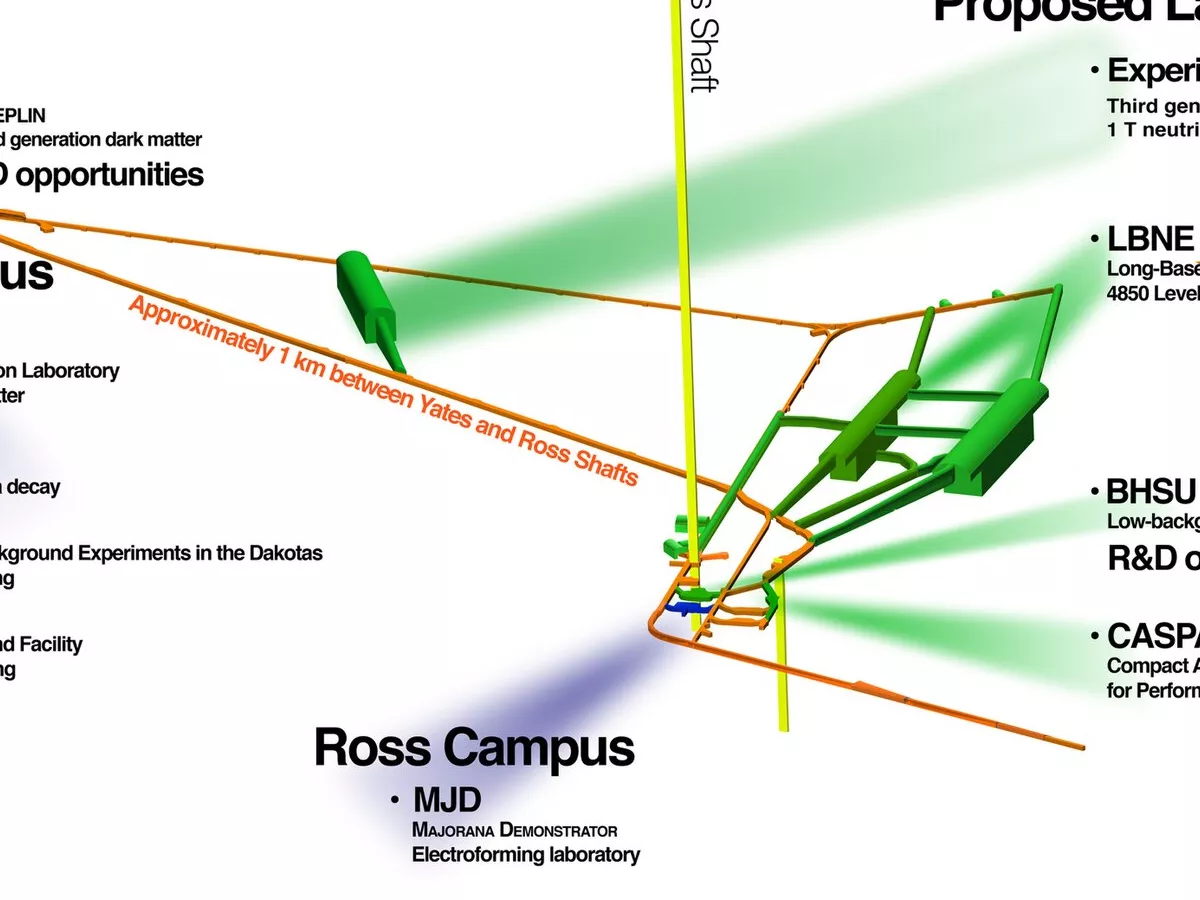
Image information
This is a representative image for this Daily News lesson.
Intro
A brief signal recorded by a dark matter detector in South Dakota has prompted fresh discussion about whether scientists are moving closer to detecting dark matter. NPR’s Scott Detrow explored the question with Priyamvada Natarajan, a theoretical astrophysicist at Yale University.
Vocabulary
| Word | Part of speech | Meaning | Example |
|---|---|---|---|
| renewed adjective | adjective | Meaning: made active or important again after a period of less attention | Example: The discovery renewed public interest in ocean research. |
| theoretical adjective | adjective | Meaning: based on ideas or principles rather than practical testing or direct observation | Example: Theoretical models can help scientists explain results they cannot yet observe directly. |
| unusual adjective | adjective | Meaning: different from what is normal, expected, or commonly seen | Example: The unusual pattern encouraged the researchers to examine the data again. |
| settle verb | verb | Meaning: to resolve a question or disagreement conclusively | Example: One experiment cannot settle a complicated scientific debate. |
| uncertainty noun | noun | Meaning: a lack of confidence about what is true or what will happen | Example: The uncertainty surrounding the forecast made planning difficult. |
| assess verb | verb | Meaning: to examine something carefully in order to judge its importance or quality | Example: The committee will assess the proposal before making a recommendation. |
| convincing adjective | adjective | Meaning: persuasive enough to make someone believe that something is true | Example: The researcher presented a convincing explanation for the unexpected result. |
The story
A strange blip recorded by a dark matter detector in South Dakota has renewed a basic question in modern science: Are researchers any closer to detecting dark matter?
NPR’s Scott Detrow discussed the signal with Priyamvada Natarajan, a theoretical astrophysicist at Yale University. Their conversation focused on what the unusual recording might mean and whether it deserves to be treated as a possible sign of progress.
The central difficulty is that the blip does not, by itself, settle the question. The event could prove important, but it could also be a fluke. That uncertainty is the reason the recording has attracted attention without providing a final answer. Researchers must consider both possibilities as they assess what happened.
The discussion presents the signal as part of a broader effort to understand whether dark matter can be detected. In that context, even an unexplained recording can lead to useful questions. Scientists may ask whether the blip fits what the detector was designed to observe or whether another explanation is more convincing. However, the available report does not establish that the detector has identified dark matter.
Natarajan’s participation adds a theoretical perspective to the conversation. Her discussion with Detrow connects the technical question of one detector’s unusual result with the larger challenge of deciding when evidence is strong enough to support a scientific conclusion.
For now, the South Dakota recording remains an intriguing possibility rather than a confirmed discovery. Its importance depends on how scientists interpret the signal and whether it can be understood as more than an isolated fluke. The NPR report therefore leaves readers with a measured conclusion: the search may be producing interesting clues, but the question of direct detection remains open.
Warm-up questions
- What kinds of evidence would convince you that an unusual scientific signal is meaningful?
- Why might scientists hesitate before calling an unexpected recording a discovery?
Comprehension questions
- What basic question has the strange blip renewed?
- Why does the recording attract attention without providing a final answer?
- What must researchers consider while assessing the event?
- What does the available report not establish?
- What measured conclusion does the report leave readers with?
Opinion questions
- Do you think unusual scientific results should receive public attention before they are confirmed? Explain your view.
- Would you describe the report’s conclusion as appropriately cautious or too limited? Why?
Further discussion
- How can scientists distinguish a genuine discovery from an isolated fluke?
- What responsibilities do journalists have when reporting uncertain scientific evidence?
Writing prompt
- Write a 180-word response explaining why scientific evidence must be interpreted cautiously.
Practice this story
4 testsSources
Topics
-

Science & Technology
Archaeologists race to save artifacts in Alaska after storm damage
Sep 20, 2026 2 min read B2 -
Science & Technology
‘Fire amoeba’ sets a new thermal limit for complex life
Sep 23, 2026 2 min read C2 -

Science & Technology
Science roundup highlights T. rex footprints, solar “superflares,” and reading’s reported brain benefits
Sep 18, 2026 2 min read C2 -

Science & Technology
Pennsylvania Reports Third Measles-Related Death in Less Than Three Weeks
Sep 14, 2026 2 min read C1 -

Science & Technology
August Was the Hottest Month Ever Recorded Globally, Scientists Say
Sep 13, 2026 3 min read C2 -

Science & Technology
A fossil feather from the age of dinosaurs may explain why only some birds survived
Sep 11, 2026 2 min read B1