
B1–B2: Grammar in Context
Connect ideas, tell stories and express possibilities with greater control.
- Level
- B1–B2
- Lessons
- 35
- Ready
- 35
Lessons
35 lessons
-
 B1 Lesson 13 20 min Not started
Used to, would and be used to: Habits and familiarity
Talk about past habits with used to and would, and describe familiar situations with be used to. Practise get used to for becoming comfortable with a new routine.
Start lesson -
 B1 Lesson 14 20 min Not started
Defining relative clauses: Who, which and that
Identify the person or thing you mean with who, which, that, whose and where. Practise linking ideas and recognise when you can leave out an object relative pronoun.
Start lesson -
 B1 Lesson 15 20 min Not started
Non-defining relative clauses: Adding extra information
Add useful extra information with who, which and whose, separating the clause with commas. Learn why you cannot use that or leave out the relative pronoun in these clauses.
Start lesson -
 B1 Lesson 16 20 min Not started
Gerund or infinitive: Choosing the form after a verb
Choose -ing or to + verb after verbs such as avoid, suggest, plan and promise. Explore cases where both patterns are possible but the meaning changes.
Start lesson -
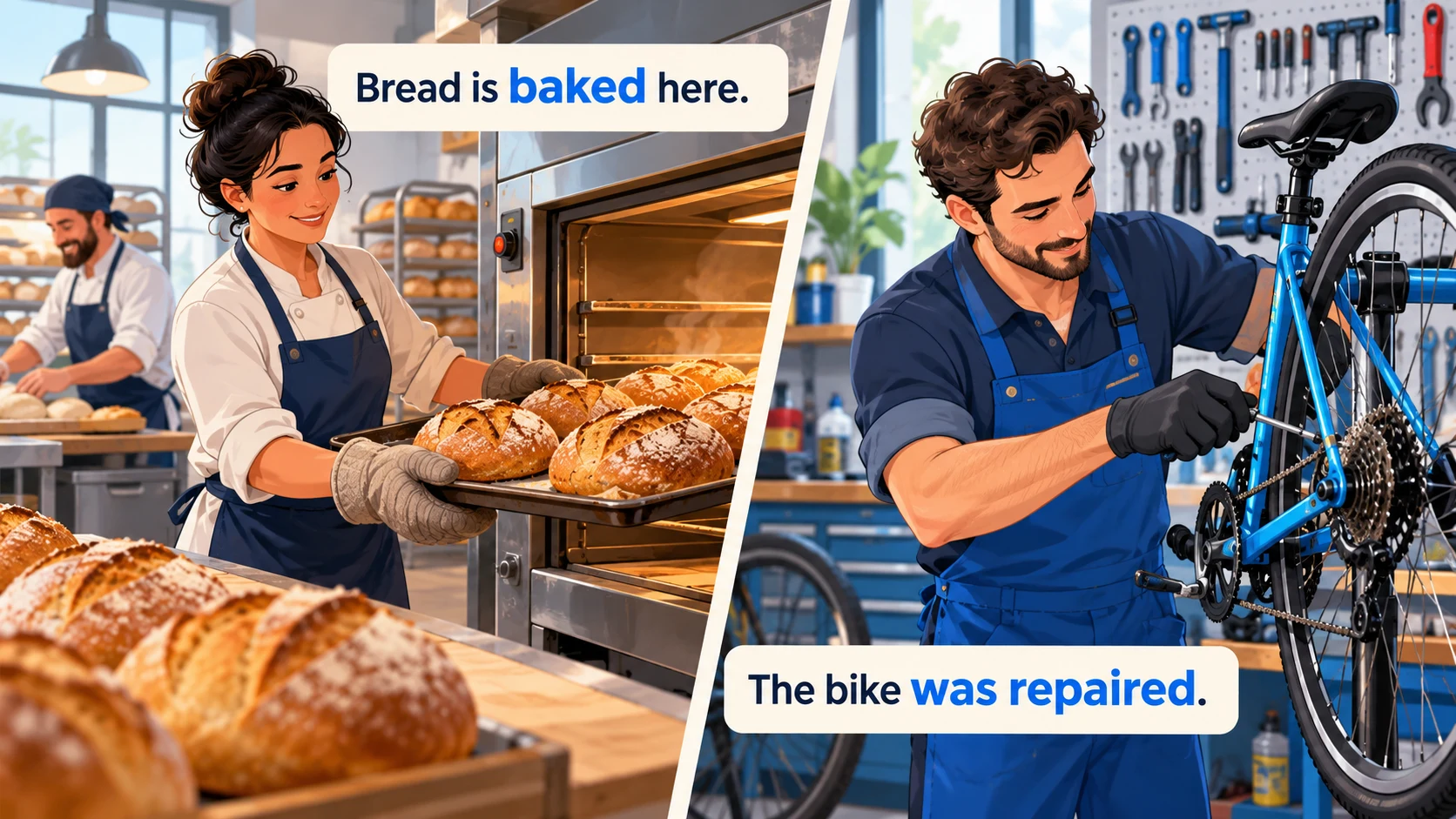 B1 Lesson 17 20 min Not started
Passive voice: Is made, was built and can be done
Focus on an action or its result using be and a past participle. Practise present, past and modal passives, and decide when the person doing the action needs to be mentioned.
Start lesson -
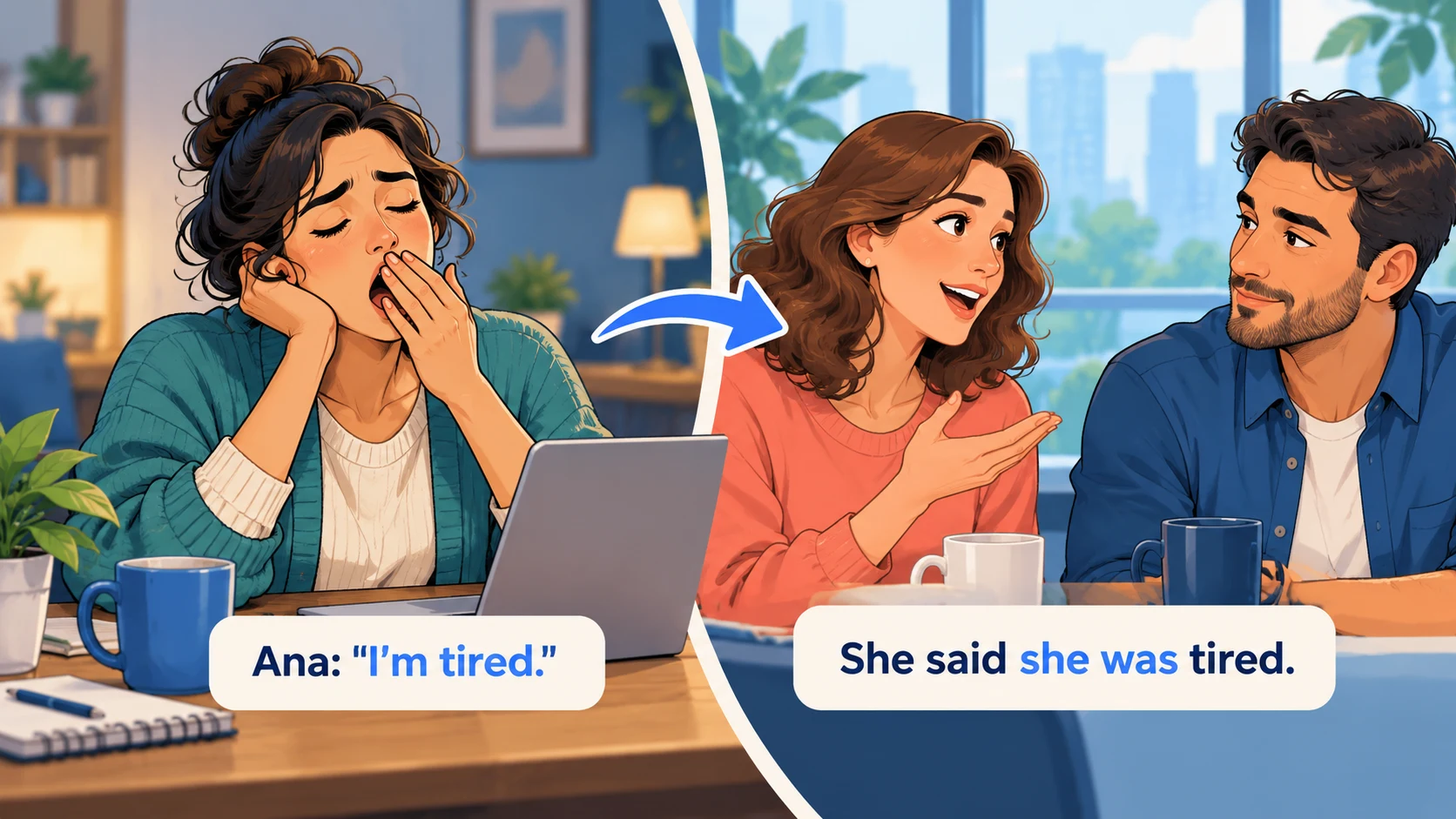 B1 Lesson 18 20 min Not started
Reported statements: Say, tell and tense changes
Report what someone said using say and tell. Practise changes to verb forms, pronouns and time expressions, and recognise when a statement is still true and a tense change is optional.
Start lesson -
 B1 Lesson 19 20 min Not started
Reported questions and requests: Ask and tell
Report questions with if, whether and question words using statement word order. Practise ask or tell + person + to-infinitive for requests and instructions.
Start lesson -
 B1 Lesson 20 25 min Not started
B1 review: Modals, relative clauses and reported speech
Use modals, relative clauses, verb patterns, passives and reported speech together in context. Check that your choices preserve the speaker's meaning and connect ideas clearly.
Start lesson -
 B2 Lesson 21 25 min Not started
Future continuous: What will be happening?
Use will be + -ing for actions in progress at a future time. Practise negative forms and questions, including polite enquiries about someone's expected plans.
Start lesson -
 B2 Lesson 22 25 min Not started
Future perfect simple and continuous: By that time
Use will have done for completion before a future deadline and will have been doing for duration up to that point. Compare the two forms in plans and predictions.
Start lesson -
 B2 Lesson 23 25 min Not started
Third conditional: Imagining a different past
Imagine how a past situation could have turned out differently with if + had + past participle. Practise would, could and might have to express alternative results.
Start lesson -
 B2 Lesson 24 25 min Not started
Mixed conditionals: Past causes and present results
Connect an unreal past situation to a present result, or a present characteristic to a past outcome. Practise choosing conditional forms by following the time of each idea.
Start lesson