A Personalized mRNA Vaccine Offers Hope Against Pancreatic Cancer—But Researchers Still Seek Answers
 By Emma Carter
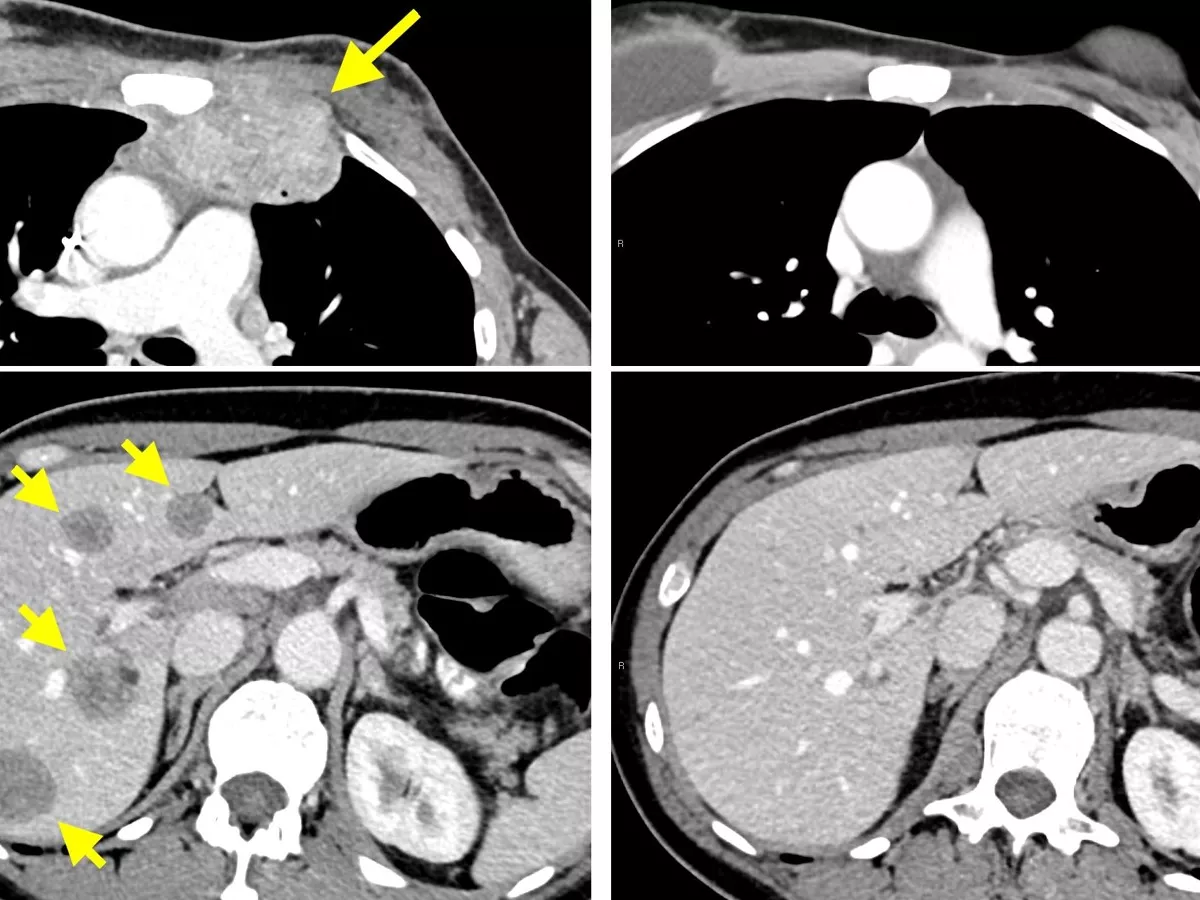
Image information
This is a representative image for this Daily News lesson.
Intro
Donna Gustafson became the first person to receive an mRNA vaccine designed to treat pancreatic cancer. Her continuing health has encouraged researchers, even as they investigate why similar approaches succeed in some patients but fail in others.
Vocabulary
| Word | Part of speech | Meaning | Example |
|---|---|---|---|
| improbable adjective | adjective | Meaning: Unlikely to occur or be true, especially because circumstances make it seem surprising. | Example: The committee considered the proposal improbable but not impossible. |
| distinctive adjective | adjective | Meaning: Clearly characteristic of a particular person, group, condition, or category. | Example: The manuscript is recognizable by its distinctive syntax and restrained irony. |
| tailored adjective | adjective | Meaning: Carefully adapted to the specific requirements or characteristics of an individual case. | Example: The consultancy provided a tailored strategy rather than a generic recommendation. |
| striking adjective | adjective | Meaning: Highly noticeable or impressive because of its unusual magnitude, clarity, or effect. | Example: The report presents a striking disparity between expenditure and measurable outcomes. |
| unresolved adjective | adjective | Meaning: Not yet settled, explained, or conclusively answered. | Example: The investigation left several methodological questions unresolved. |
| recurrence noun | noun | Meaning: The return of a disease, problem, or event after it has apparently subsided. | Example: Regular monitoring is intended to detect recurrence before symptoms become severe. |
| ambition noun | noun | Meaning: A strong, purposeful aim to achieve something significant or difficult. | Example: The institution’s ambition is to make advanced treatment accessible without sacrificing rigor. |
| exceptional adjective | adjective | Meaning: Unusually rare, outstanding, or outside what is ordinarily expected. | Example: The study describes an exceptional result that requires independent confirmation. |
The story
Seven years after becoming the first person to receive an mRNA vaccine designed to treat pancreatic cancer, Donna Gustafson is living with an outcome that once seemed improbable. At 72, the retired accountant hikes, travels, lifts weights, and enjoys an active life with Ed, her husband of 50 years. Doctors have found no evidence of the Stage II pancreatic cancer that had threatened to end it.
Gustafson received a personalized vaccine made from samples of her tumor. The aim was to train her immune system to identify mutant proteins distinctive to her cancer cells and destroy them. Unlike a treatment intended to work broadly across patients, this approach was tailored to the biological features of one person’s tumor.
Her treatment formed part of a small clinical trial involving 16 people with pancreatic cancer. Gustafson received nine doses, as well as surgery and chemotherapy. The vaccine appeared to work in half of the participants; seven of those eight patients were still alive when the account was published.
The result is promising, but it does not establish that the vaccine will work reliably for other patients. Researchers are still trying to determine why some cancer-vaccine trials have failed while others have produced striking outcomes. Gustafson’s case is therefore both encouraging and scientifically unresolved: her long-term health offers evidence of possibility, not a universal solution.
Interest in mRNA cancer vaccines has expanded beyond pancreatic disease. Merck and Moderna recently reported results from a major trial involving skin cancer, describing a 42 percent reduction in recurrence and death over two years. Similar vaccine strategies are being tested against lung, kidney, bladder, and brain cancers.
These efforts combine mRNA with genomic analysis and artificial intelligence to identify targets that may distinguish cancerous cells from healthy tissue. The broader ambition is to make the immune system more precise in its attack. For now, however, Gustafson’s experience remains an exceptional result within a field whose potential is substantial but whose limits are not yet fully understood.
Warm-up questions
- What would make a medical treatment genuinely personalized rather than merely individualized in name?
- Why might one unusually successful patient case inspire research without proving a treatment’s reliability?
Comprehension questions
- What lifestyle does Gustafson maintain seven years after treatment?
- How was Gustafson’s vaccine specifically designed for her?
- What proportion of trial participants appeared to benefit from the vaccine?
- Why does Gustafson’s case not establish a universal treatment?
- What broader technologies are being combined with mRNA vaccines?
Opinion questions
- Should exceptional individual outcomes influence public expectations about experimental treatments? Explain your position.
- Does the article strike the right balance between scientific optimism and caution? Why or why not?
Further discussion
- What ethical tensions might arise when highly personalized cancer treatments are available only through small trials?
- How could artificial intelligence improve cancer treatment while still leaving researchers uncertain about causation?
Writing prompt
- Write a 250-word analytical response evaluating what Gustafson’s case demonstrates—and does not demonstrate—about personalized cancer vaccines.