
How to Limit Rat Numbers? Train Humans
 By Emma Carter
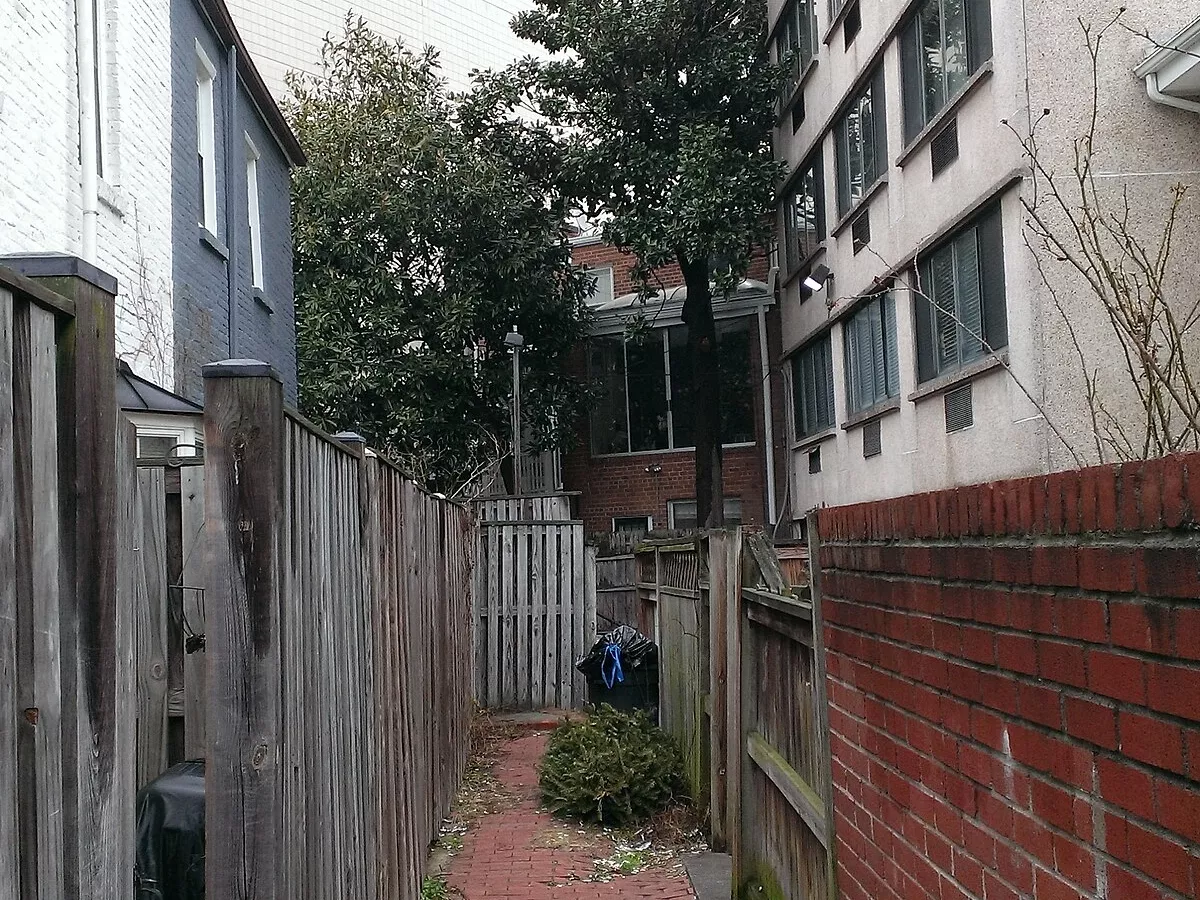
Image information
This is a representative image for this Daily News lesson.
Intro
A rat-control effort in D.C. is focusing on people rather than rodents, taking residents into back alleys to make the problem more visible.
Vocabulary
| Word | Part of speech | Meaning | Example |
|---|---|---|---|
| intervention noun | noun | Meaning: an action intended to alter a situation or prevent an undesirable outcome | Example: Early intervention prevented the disagreement from becoming institutionally damaging. |
| premise noun | noun | Meaning: a proposition or assumption that forms the basis of an argument or course of action | Example: The proposal rests on the premise that transparency encourages institutional trust. |
| thrive verb | verb | Meaning: to grow, develop, or prosper vigorously, often despite adverse conditions | Example: Some enterprises thrive precisely because they adapt quickly to uncertainty. |
| illuminate verb | verb | Meaning: to clarify an issue or make something intellectually or physically more apparent | Example: The investigation illuminates the institutional incentives behind the policy. |
| tangible adjective | adjective | Meaning: clear and concrete enough to be perceived, demonstrated, or experienced directly | Example: The committee demanded tangible evidence before endorsing the ambitious reform. |
| insufficient adjective | adjective | Meaning: inadequate for a particular purpose or standard | Example: The evidence was insufficient to justify such a sweeping conclusion. |
| consequential adjective | adjective | Meaning: having significant effects or importance, especially beyond the immediate situation | Example: The seemingly minor amendment proved consequential for future negotiations. |
| deployed verb | verb | Meaning: used or arranged deliberately for a particular purpose | Example: The organization deployed its limited resources where they could have the greatest effect. |
The story
Rat control is often associated with poison, but D.C.’s Rat Rangers are pursuing a different point of intervention: human understanding. Their premise, as described in NPR’s coverage, is straightforward. No matter how much poison is put out, rats continue to thrive. If the problem persists despite that approach, the people living alongside it may need to become part of the response.
The Rat Rangers are therefore trying education—not of the rats, but of residents. They take people into back alleys to illuminate the problem, turning an issue that might otherwise remain out of sight into something residents can observe directly. The expeditions give the program a practical dimension: education is not presented merely as information delivered from a distance, but as an encounter with the places where the problem is visible.
That emphasis subtly changes the question. Instead of asking only how much poison should be deployed, the initiative asks what residents need to understand about the conditions surrounding persistent rat numbers. The source does not provide a detailed account of the lessons or specify which particular practices residents are expected to adopt. It does, however, make the central strategy clear: the Rat Rangers are attempting to address the problem by teaching people.
The approach also draws a distinction between treating a symptom and examining the wider situation. Poison may be used repeatedly, yet the rats continue to thrive. Education cannot be described, on the available information, as a guaranteed solution. Rather, it is the method this D.C. group is trying as it seeks a response that involves residents themselves.
By taking people into back alleys, the Rat Rangers make the issue tangible. Residents are not simply told that rats remain a problem; they are shown the problem in its setting. That act of illumination may help explain why the group has chosen human instruction as its focus, even though the immediate subject is an animal population.
The story’s broader lesson is modest but consequential: when a familiar control measure appears insufficient, changing public understanding can become part of the intervention. In D.C., the Rat Rangers are testing that idea through education, one resident visit at a time.
Warm-up questions
- What urban problems are unlikely to be solved by technology or enforcement alone?
- How might direct observation change residents’ willingness to address a local problem?
Comprehension questions
- What central premise motivates the Rat Rangers’ educational approach?
- How do the back-alley expeditions give the program a practical dimension?
- What limitation does the source explicitly acknowledge about residents’ expected practices?
- What distinction does the approach draw between poison and education?
- What broader lesson does the story offer about familiar control measures?
Opinion questions
- Would seeing a problem firsthand make you more likely to change your habits? Why or why not?
- Should public education be funded when its effectiveness remains uncertain? Explain your position.
Further discussion
- What kinds of urban problems require residents to become active participants rather than passive recipients?
- How can authorities educate communities without shifting excessive responsibility onto individuals?
Writing prompt
- Write a 250-word analytical response explaining when public education can function as a genuine intervention rather than merely an information campaign.
Practice this story
4 testsSources
Topics
-

Health & Lifestyle
Step, stand, stairs: New study suggests movement pace may matter for longevity
Sep 15, 2026 3 min read C2 -

Health & Lifestyle
Whatever happened to the measles outbreak that shocked Bangladesh this year?
Sep 10, 2026 2 min read C2 -

Health & Lifestyle
In Chennai, Fisherfolk Face an Uncertain Struggle With the Sea
Sep 21, 2026 2 min read C1 -

Health & Lifestyle
NPR report examines the stigma surrounding HIV
Sep 13, 2026 2 min read B1 -

Health & Lifestyle
How to Fight With the People We Care About, Illustrated
Sep 12, 2026 2 min read B2 -

Health & Lifestyle
“I’ve never seen anything like this” — A U.S. doctor treats Ebola’s youngest victims
Sep 11, 2026 2 min read C1