
‘Fire amoeba’ sets a new thermal limit for complex life
 By Emma Carter
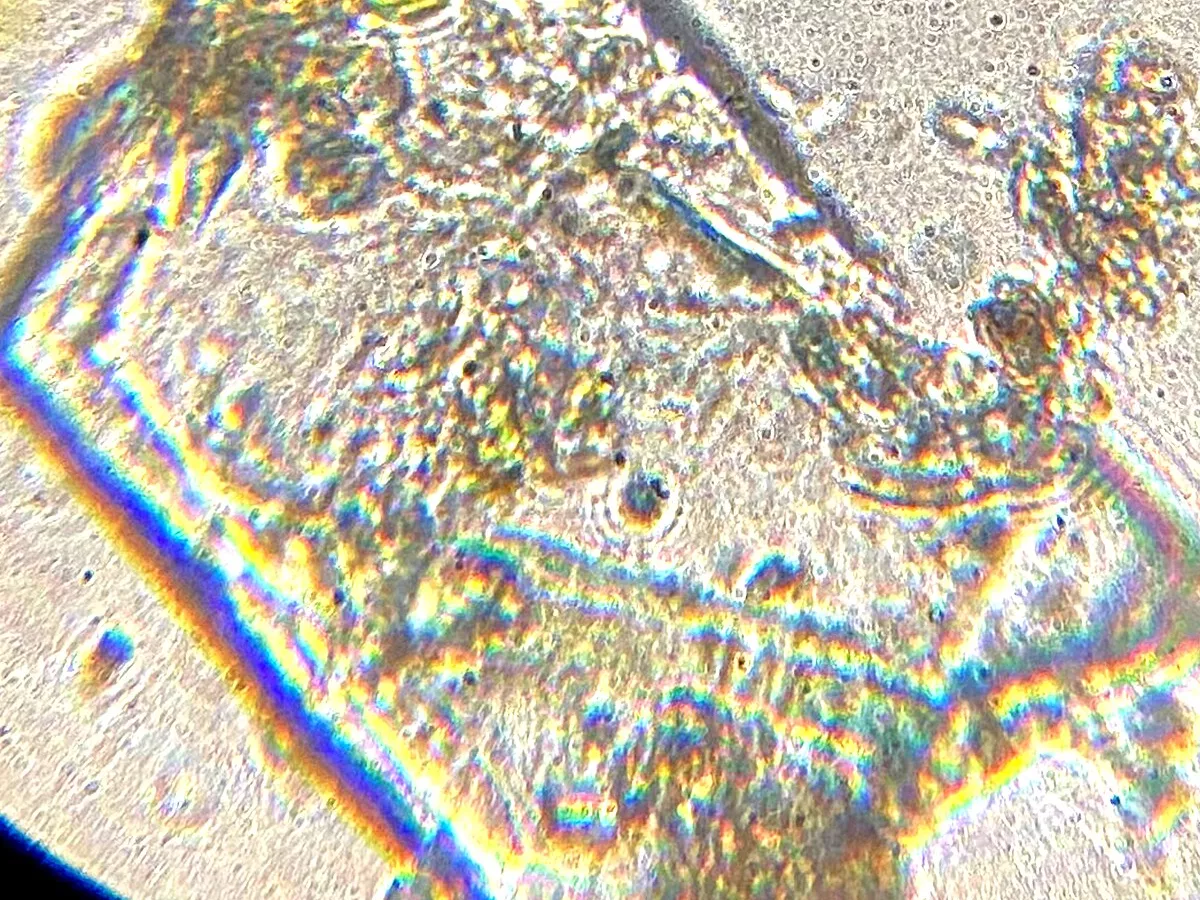
Image information
This is a representative image for this Daily News lesson.
Intro
Scientists have identified a species they have named the fire amoeba, establishing a record thermal limit for complex eukaryotic life.
Vocabulary
| Word | Part of speech | Meaning | Example |
|---|---|---|---|
| thermal adjective | adjective | Meaning: Relating to heat, temperature, or the transfer of heat. | Example: The researchers established a thermal boundary that challenges conventional assumptions. |
| organism noun | noun | Meaning: An individual living entity, especially one considered biologically or functionally. | Example: This resilient organism remains active despite prolonged exposure to intense heat. |
| capabilities noun | noun | Meaning: The abilities or capacities that enable something to perform particular functions. | Example: The experiment revealed capabilities previously thought impossible for organisms of this complexity. |
| threshold noun | noun | Meaning: A specified point at which a condition, response, or process begins or changes. | Example: The species appears to operate near the threshold of physiological failure. |
| eukaryotic adjective | adjective | Meaning: Having cells with a nucleus and other membrane-bound internal structures. | Example: The study concerns a eukaryotic organism rather than a simpler microbial form. |
| interchangeable adjective | adjective | Meaning: Capable of being substituted for one another without a meaningful difference. | Example: Operational endurance and reproductive viability are related but not interchangeable concepts. |
| benchmark noun | noun | Meaning: A standard or reference point against which performance or progress is assessed. | Example: The measurement provides a benchmark for evaluating thermal tolerance in complex organisms. |
| consequently adverb | adverb | Meaning: As a result of a preceding fact, condition, or line of reasoning. | Example: The evidence is limited; consequently, broader biological conclusions remain provisional. |
The story
Scientists have identified a species they have named the fire amoeba, a discovery that pushes the known thermal boundary of complex life. NPR reports that the organism can reproduce at 145°F and continue moving at temperatures as high as 147°F. Together, those measurements establish a record for complex eukaryotic life.
The two temperatures describe different biological capabilities. Reproduction at 145°F means that the fire amoeba can produce new individuals at that temperature. Movement at 147°F means that it remains capable of motion at a slightly higher temperature. The distinction matters because an organism’s ability to remain active is not necessarily identical to its ability to reproduce.
The finding therefore involves more than a single extreme-temperature observation. It identifies one threshold for reproduction and another for movement, offering a precise account of how the species functions under intense heat. The gap between the two measurements is only two degrees, but it separates the reported limit for producing new individuals from the reported limit for continuing to move.
The term “eukaryotic life” places the discovery within a broad category of complex organisms. In the verified account, the fire amoeba is notable because its reported thermal limits apply to an organism in that category. The result consequently extends the record associated with complex eukaryotic life, rather than describing only a general capacity to survive briefly in hot conditions.
The species’ name reflects the striking nature of the measurements, while the temperatures provide the basis for the scientific significance. At 145°F, the fire amoeba can reproduce; at 147°F, it can still move. Those facts define the central finding without requiring the two abilities to be treated as interchangeable.
The verified story package does not specify where the species was found or studied, and it provides no additional details about its biology. What it does establish is a clear thermal benchmark: the fire amoeba can perform two important forms of biological activity at temperatures that set a record for complex eukaryotic life. The discovery consequently challenges assumptions about the upper limits of what such life can do.
Warm-up questions
- What distinctions might exist between an organism’s ability to move and its ability to reproduce?
- Why might a two-degree difference matter when scientists describe extreme biological limits?
Comprehension questions
- What two thermal capacities does the fire amoeba reportedly possess?
- Why does the article distinguish reproduction from movement?
- What does the two-degree gap separate?
- How does the article qualify the significance of the finding?
- What information does the verified story package leave unspecified?
Opinion questions
- Does distinguishing movement from reproduction make the article’s scientific argument more convincing? Why or why not?
- Should a record thermal limit alter assumptions about what complex life can tolerate? Explain your position.
Further discussion
- How might scientists design follow-up experiments to investigate the gap between the two temperatures?
- What limitations arise when a discovery is scientifically significant but its location and biological context remain unknown?
Writing prompt
- Write a discursive analysis explaining why the fire amoeba’s two thermal limits matter, while distinguishing established evidence from reasonable inference.
Practice this story
4 testsSources
Topics
-
Science & Technology
Science roundup highlights T. rex footprints, solar “superflares,” and reading’s reported brain benefits
Sep 18, 2026 2 min read C2 -
Science & Technology
August Was the Hottest Month Ever Recorded Globally, Scientists Say
Sep 13, 2026 3 min read C2 -
Science & Technology
Heat Deaths Highlight the Particular Risks Facing Americans in Manufactured Homes
Sep 8, 2026 2 min read C2 -
Science & Technology
Archaeologists race to save artifacts in Alaska after storm damage
Sep 20, 2026 2 min read B2 -

Science & Technology
Pennsylvania Reports Third Measles-Related Death in Less Than Three Weeks
Sep 14, 2026 2 min read C1 -
Science & Technology
A fossil feather from the age of dinosaurs may explain why only some birds survived
Sep 11, 2026 2 min read B1