Some Universities Offer Students Housing in Retirement Communities
 By Emma Carter

Image information
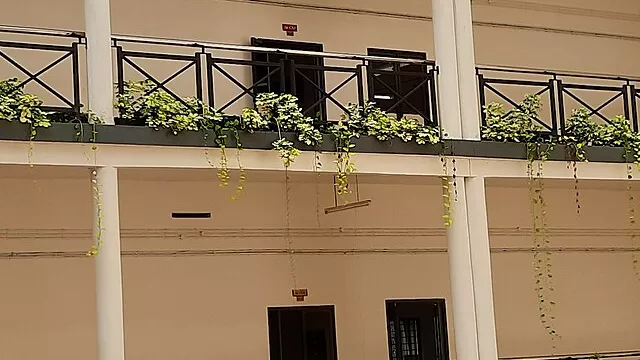
This is a representative image for this Daily News lesson.
Intro
Some universities are offering students a less conventional housing option: living in retirement communities alongside seniors.
Vocabulary
| Word | Part of speech | Meaning | Example |
|---|---|---|---|
| accommodation noun | noun | Meaning: a place where someone lives or stays | Example: The university arranged temporary accommodation for visiting researchers. |
| distinction noun | noun | Meaning: a meaningful difference between two things or categories | Example: The distinction between formal and informal language is often context-dependent. |
| residential adjective | adjective | Meaning: related to housing or places where people live | Example: The city is developing a new residential district near the river. |
| intergenerational adjective | adjective | Meaning: involving or relating to people from different generations | Example: The project encourages intergenerational cooperation through shared community activities. |
| proximity noun | noun | Meaning: the state of being near someone or something | Example: The museum’s proximity to the station makes it easy to reach. |
| conventional adjective | adjective | Meaning: usual, traditional, or widely accepted | Example: The committee rejected a conventional solution and tested a more flexible design. |
| participating adjective | adjective | Meaning: taking part in a particular activity or arrangement | Example: Students at participating colleges may apply for the exchange program. |
The story
Some universities are offering students an alternative to the usual housing choices associated with higher education: a place in a retirement community, living alongside seniors. The programs move student accommodation beyond the familiar distinction between housing on campus and housing elsewhere.
For students who take part, the essential change is residential rather than academic. They remain university students, but their home can be within a community whose residents include older adults. The seniors remain residents of the retirement community, while both groups share the same broader living environment.
The development does not mean that every university is adopting this model. Rather, some institutions are making it available as an option alongside more conventional on-campus and off-campus arrangements. This makes retirement-community living a distinct addition to the range of places a student may consider living while studying.
A retirement community is, in general, a residential community for older adults. Bringing students into such a setting creates an intergenerational residential environment: one that includes people from different generations. On-campus housing usually refers to accommodation connected to a university, while off-campus housing refers to accommodation outside the campus setting.
Student residences and retirement communities are often understood as separate kinds of housing, serving people at notably different stages of life. The programs described here place them in the same broad residential setting. They do not replace existing campus or private housing choices; instead, they offer another possible setting for students at participating universities.
The approach is notable because it brings student life and senior living into closer residential proximity. It also illustrates that a university housing option need not be located in a conventional student residence. In this context, “intergenerational” describes the shared setting, rather than a separate academic program.
At its core, the development is straightforward: some universities are offering students a chance to live in retirement communities where older adults also live.
Warm-up questions
- What advantages and tensions might arise when students and seniors share housing?
- How might residential setting influence a student’s experience beyond academic study?
Comprehension questions
- What fundamental change do the programs make for participating students?
- How does the article characterize the programs’ availability?
- What does intergenerational residential environment mean in this context?
- How do the programs relate to existing housing choices?
- Why is the approach notable according to the article?
Opinion questions
- Would you consider living in a retirement community during university? Explain your reasoning.
- Should universities actively promote intergenerational housing, or simply make it available?
Further discussion
- What institutional policies could make intergenerational housing respectful and sustainable?
- How might this model challenge conventional assumptions about student housing?
Writing prompt
- Write a balanced C1-level proposal evaluating whether your university should introduce intergenerational residential housing.