Two Americans win Nobel economics prize for research on boom-and-bust cycles
 By Emma Carter
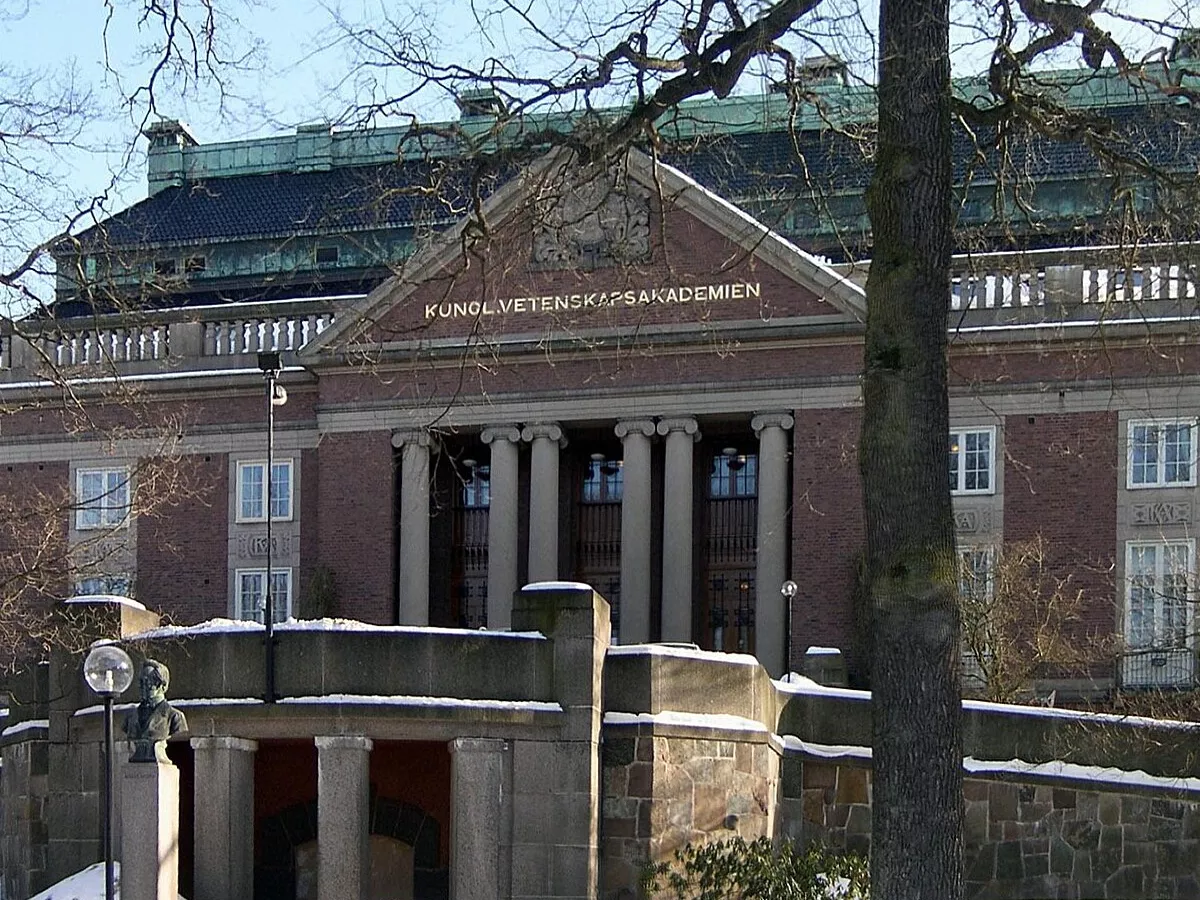
Image information
This is a representative image for this Daily News lesson.
Intro
Two U.S. economists have received the 2026 Nobel Memorial Prize in Economic Sciences for research into reducing the sharp rises and falls that can affect economies.
Vocabulary
| Word | Part of speech | Meaning | Example |
|---|---|---|---|
| economists noun | noun | Meaning: People who study how money, businesses, and societies use resources. | Example: Several economists compared the effects of higher interest rates. |
| research noun | noun | Meaning: Careful study carried out to discover or explain facts and ideas. | Example: Her research examined how transport affects local employment. |
| households noun | noun | Meaning: People living together who make shared decisions about money and daily life. | Example: Many households are changing their spending because energy costs have risen. |
| purchasing noun | noun | Meaning: The activity of buying goods or services. | Example: Online purchasing has become common among older consumers. |
| worsen verb | verb | Meaning: To become or make something more difficult, serious, or harmful. | Example: A sudden shortage could worsen the country’s financial problems. |
| supply noun | noun | Meaning: The amount of a product or resource that is available. | Example: A limited supply of homes has pushed rents higher. |
| policymakers noun | noun | Meaning: People who create plans and rules for a government or organization. | Example: Policymakers are considering several ways to support small businesses. |
The story
Two U.S. economists have won the 2026 Nobel Memorial Prize in Economic Sciences for research on how to reduce boom-and-bust cycles and limit both inflation and unemployment.
Robert E. Hall of Stanford University and Michael Woodford of Columbia University were announced as the winners at the Royal Swedish Academy of Sciences in Stockholm on Monday. Their work focuses on the choices made by individual households and businesses, including decisions about purchases and prices. It helped establish the economic approach known as New Keynesian economics.
The importance of this research has become especially clear in recent years. The pandemic forced millions of people out of work, while later supply problems pushed up the cost of living. Such events can create difficult economic conditions, and governments and central banks often try to reduce the size of these swings.
Hall studied demand and the way households decide what to buy. These decisions depend not only on people’s current purchasing power but also on what they expect their future incomes to be. If consumers believe that economic conditions may worsen, they may reduce their spending before problems fully appear.
Woodford examined the supply side and how businesses set prices. Changing prices has traditionally been costly, so companies often try to predict future conditions and set prices that will cover their costs over a longer period.
The economists’ work also emphasizes the importance of expectations. Since households and businesses look ahead, policymakers need to explain their plans clearly. The prize is a memorial award honoring Alfred Nobel rather than one of the five original Nobel Prizes.
Warm-up questions
- What economic changes can make people or businesses spend less money?
- Why might clear government communication influence economic behavior?
Comprehension questions
- What was the main reason Hall and Woodford received the prize?
- Where and when were the economists announced as winners?
- How might consumers respond when they expect economic conditions to deteriorate?
- Why do businesses try to predict future conditions when setting prices?
- What do policymakers need to do because households and businesses look ahead?
Opinion questions
- Should governments intervene strongly during periods of economic instability? Explain your view.
- Would you personally reduce spending if you expected your future income to fall? Why or why not?
Further discussion
- How can unclear communication from a central bank affect households and businesses?
- Which economic problem is usually more damaging to ordinary people: inflation or unemployment?
Writing prompt
- Write a developed paragraph explaining how expectations can influence economic stability. Use examples from the article and your own ideas.