Air Canada Rebooking Left a Delayed Traveler Without a Return Flight
 By Emma Carter

Image information
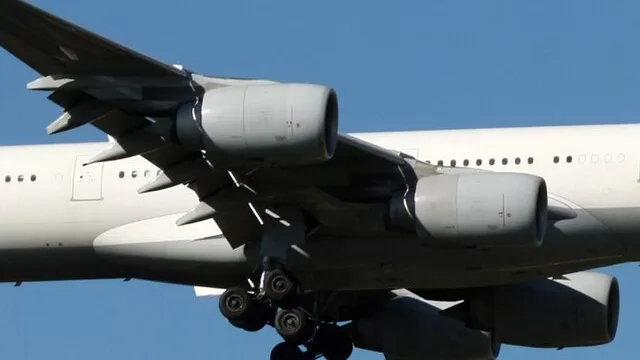
This is a representative image for this Daily News lesson.
Intro
An airline intervention intended to resolve a disrupted journey instead left one traveler facing an unexpected and expensive problem abroad.
Vocabulary
| Word | Part of speech | Meaning | Example |
|---|---|---|---|
| intervention noun | noun | Meaning: an action taken to alter or improve a situation | Example: The mediator's intervention prevented the dispute from escalating. |
| disclosed verb | verb | Meaning: made information known, especially information that had previously been concealed | Example: The report disclosed several weaknesses in the institution's oversight procedures. |
| stranded adjective | adjective | Meaning: left without the means to continue or return | Example: The storm left hundreds of commuters stranded overnight. |
| itinerary noun | noun | Meaning: a planned route or schedule for a journey | Example: The revised itinerary included two connections and an overnight stop. |
| consequently adverb | adverb | Meaning: as a result of something previously mentioned | Example: The evidence was inconclusive; consequently, the committee postponed its decision. |
| reimbursement noun | noun | Meaning: payment made to compensate someone for an expense | Example: She submitted receipts to request reimbursement for the emergency accommodation. |
| intact adjective | adjective | Meaning: remaining complete and undamaged | Example: Despite the disruption, the underlying agreement remained intact. |
| undisclosed adjective | adjective | Meaning: not revealed or made known | Example: The undisclosed fee significantly altered the apparent affordability of the contract. |
The story
Air Canada rebooked a delayed traveler from Toronto to Europe, offering what appeared to be a practical response to an interrupted journey. However, the airline did not tell her that it had also canceled her return trip. The change therefore addressed the immediate disruption while leaving a crucial part of the itinerary unresolved.
After the traveler reached Europe, she was stranded without the return flight she had expected to use. The problem was not simply that her plans had changed. Because the cancellation had not been disclosed alongside the rebooking, she had to arrange a way home after arriving at her destination.
She ultimately spent $800 to get home. That cost transformed an apparently helpful intervention into a far more troubling travel experience. A passenger may understand a rebooking as confirmation that the airline has reorganized the affected journey, especially when no separate warning indicates that another segment has been removed. In this case, that understanding proved unsafe.
The incident highlights the interconnected nature of airline itineraries. A reservation is not just a collection of independent flights: the usefulness of one segment can depend on the availability of the next. When an airline changes a disrupted booking, the status of the remaining journey is consequently significant. Failure to communicate a cancellation can leave a traveler confronting an expensive problem only after reaching another country.
The supplied coverage identifies Toronto as the traveler’s starting point and Europe as the destination region, but it does not specify the European location. It also does not explain why the return trip was canceled or state whether Air Canada offered reimbursement. Those details remain unavailable in the source package.
The case nevertheless presents a clear lesson for travelers. When an airline modifies a reservation, passengers should confirm the status of every segment, including the journey home. A newly arranged outbound flight does not, by itself, establish that the rest of the itinerary remains intact. For this traveler, the missing information ultimately resulted in an $800 expense.
What began as assistance with a delayed departure thus became a broader failure of communication. The rebooking moved the traveler to Europe, but the undisclosed cancellation left her to solve the return journey on her own.
Warm-up questions
- When an itinerary changes unexpectedly, which information should a traveler verify first, and why?
- How might a seemingly helpful administrative decision create a different problem later?
Comprehension questions
- What did Air Canada fail to tell the traveler?
- Why did the cancellation become especially problematic after the traveler arrived in Europe?
- How much did the traveler ultimately spend getting home?
- What limitation does the supplied coverage acknowledge about the European destination?
- What lesson does the case present for passengers whose reservations are modified?
Opinion questions
- Should airlines be required to obtain explicit confirmation before canceling a connected return segment? Explain your position.
- Is the traveler primarily responsible for failing to verify the itinerary, or is the airline responsible for inadequate communication?
Further discussion
- What communication practices could prevent similar failures in complex, multi-segment journeys?
- How might automated booking systems make itinerary changes clearer without overwhelming passengers?
Writing prompt
- Write a 250-word critical response explaining how the incident illustrates the relationship between operational efficiency, communication, and passenger responsibility.