
California Legislature Passes Bill on Electric-Shock Gloves
 By Emma Carter
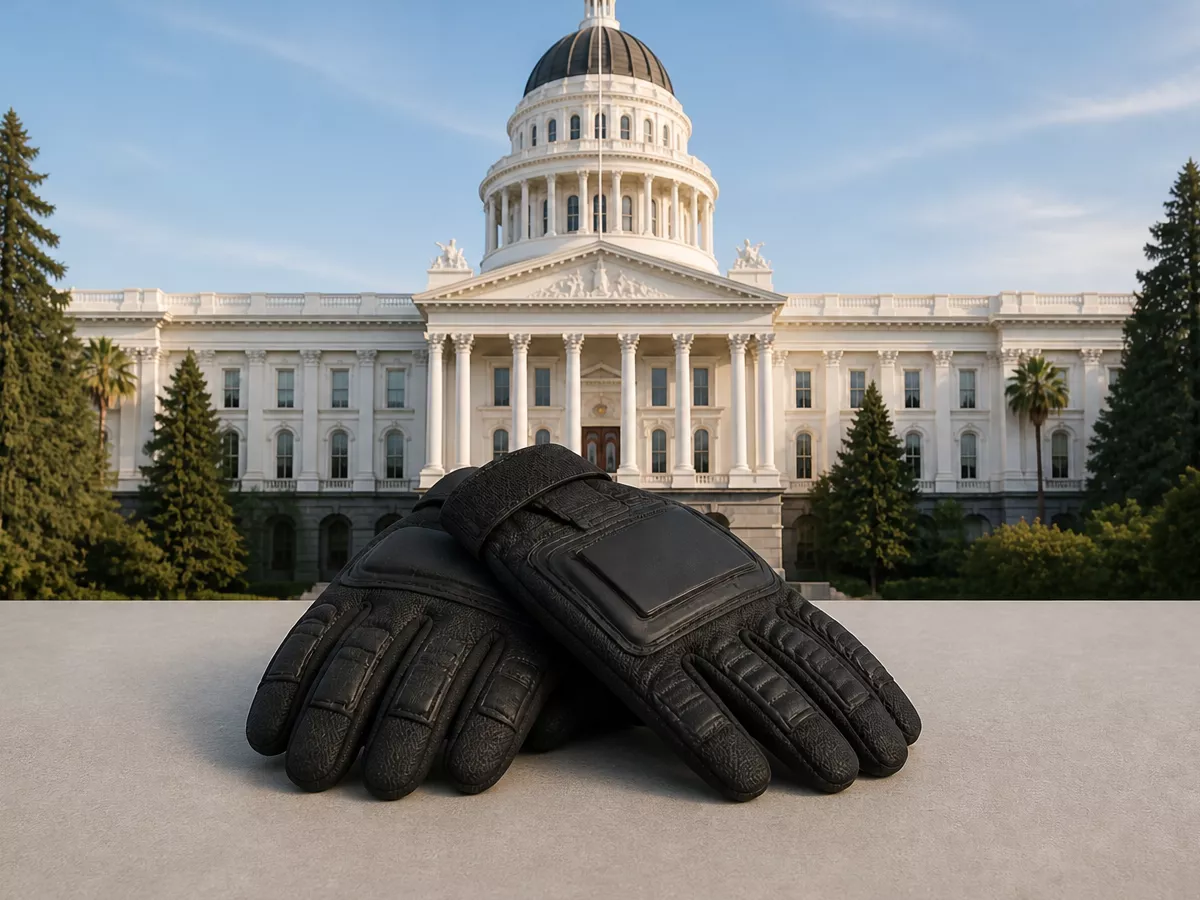
Image information
This is a representative image for this Daily News lesson.
Intro
California lawmakers have passed AB 2760, a bill about wearable devices that deliver electric shocks. The measure is not yet confirmed as signed into law.
Vocabulary
| Word | Part of speech | Meaning | Example |
|---|---|---|---|
| measure noun | noun | Meaning: a proposed law or official action | Example: The council discussed a measure to improve public transportation. |
| concurred verb | verb | Meaning: agreed with an idea, decision, or change | Example: The two committees concurred in the final changes. |
| prohibit verb | verb | Meaning: to officially stop something from being done | Example: The rules prohibit visitors from entering the closed area. |
| wearable adjective | adjective | Meaning: designed to be worn on the body | Example: The company makes wearable technology for runners. |
| opposed verb | verb | Meaning: disagreed with or resisted something | Example: Several residents opposed the plan because of its cost. |
| enactment noun | noun | Meaning: the process of making a proposed law official | Example: The law will take effect after its enactment. |
The story
California lawmakers have passed AB 2760, a bill about wearable devices that deliver electric shocks. The measure concerns how law-enforcement agencies in California may use and buy these devices.
On August 31, the California Senate passed the bill by a vote of 29-9. The Assembly then concurred in the Senate amendments. In other words, the Assembly agreed to the changes made by the Senate.
After those steps, the bill went to engrossing and enrolling. This is part of the official process for preparing a bill after legislative approval. The official record lists AB 2760 as an active bill that passed.
The proposal would prohibit federal, state, and local law enforcement from using wearable devices that deliver electric shocks. A wearable device is something a person can put on or carry on the body. In this case, the device would be worn as a glove.
The bill would also block California police departments from buying these devices with state money. This rule would affect the way police departments use public funds for equipment.
The New York Times reported that lawmakers approved the legislation in an effort to stop ICE agents from using electric-shock gloves. Local law enforcement agencies opposed the bill.
The proposal received support from civil-rights groups. Law-enforcement groups opposed it. These different views show a debate about public safety, police equipment, and the limits placed on government agencies.
The bill has not been confirmed as law. The official record in the verified package does not show that the governor had signed it. Therefore, this lesson describes legislative passage, not final enactment.
The package does not establish what penalties would apply, when any rule would begin, or whether the measure would face legal challenges. Those details are not presented as settled facts here. The clear result is that the California Legislature approved AB 2760 and moved it forward in the state process.
Warm-up questions
- What kinds of rules might control special equipment used by law enforcement?
- Why might different groups disagree about police equipment?
Comprehension questions
- What is AB 2760 about?
- How did the California Senate vote on August 31?
- What did the Assembly do after the Senate amendments?
- What would the proposal prohibit law enforcement from doing?
- Which groups supported and opposed the proposal?
Opinion questions
- Do you think rules about law-enforcement equipment should be decided by state lawmakers? Why or why not?
- Should public money be used to buy equipment that can deliver electric shocks? Explain your view.
Further discussion
- What questions should people ask before deciding whether to support this proposal?
- Why is it important to distinguish legislative passage from final enactment?
Writing prompt
- Write a short paragraph explaining what AB 2760 would do and why groups disagree about it.
Sources
Topics
-

Culture & Society
Afghan Woman Deported After First Case in Long-Dormant Terrorism Court
Sep 12, 2026 2 min read B1 -

Culture & Society
Hawaii Residents Prepare for Tropical Storm Conditions as Hurricane Lowell Passes West
Sep 7, 2026 2 min read B1 -

Culture & Society
How U.S. Courts Handle Claims of Postpartum Psychosis
Sep 3, 2026 2 min read B1 -
Culture & Society
Austin Park Changes Parking Rules for Labor Day Weekend
Sep 2, 2026 2 min read B1 -
Culture & Society
Texas Judge Uses Dolly Parton Example in Drag-Show Ruling
Aug 28, 2026 2 min read B1 -

Culture & Society
California Judge Rejects Farmworker Wage Cuts
Aug 27, 2026 2 min read B1